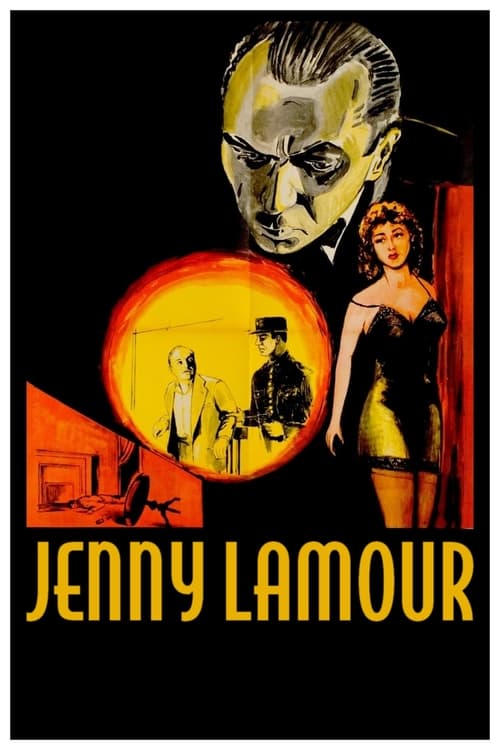




Henri-Georges Clouzot directed *Quai des Orfèvres*, a screenplay he co-wrote with Jean Ferry, adapted from Stanislas-André Steeman’s novel *Legitime defense*. The film features Louis Jouvet, Suzy Delair, Bernard Blier, and Simone Renant, with music by Francis Lopez and cinematography by Armand Thirard. After being prevented from making films for four years due to the controversy surrounding *Le Corbeau* in 1943, Clouzot’s return resulted in *Quai des Orfèvres*. Though a respected filmmaker, his dark portrayals of human nature and reportedly difficult treatment of actors have drawn criticism. Surprisingly, this film proves to be one of his most approachable, relying heavily on relatable character dynamics. At its core, the movie follows a standard police procedural format, complete with plot conveniences and coincidences, but the characters are so well-developed and their lives so engrossing that these narrative shortcomings become almost unimportant. Set in post-war Paris, the story unfolds within the world of theater and nightclubs. Initially presenting familiar film noir elements—a potential femme fatale, a distant homosexual relationship, a cuckolded husband, and a disturbing murder victim—the film also includes oddities like performers with papier-mâché heads and dogs walking on their hind legs. The clubs are filled with smoke, the streets are dimly lit to create an ominous atmosphere; Clouzot and Thirard have crafted a wonderfully moody setting for the story. The experience is quite a ride. Jenny Lamour (Delair) is positioned at the forefront of the narrative; she’s willing to use her sexuality to advance her stage career, which understandably upsets her jealous husband Maurice (Blier), who seems ill-suited to be with someone like Jenny. Clouzot reveals a secret that challenges both viewer and husband expectations, maintaining suspense regarding the murderer's identity and their motivations. There are moments of allure, and the story evolves into a tragicomedy, always grounded in realistic character flaws. Inspector Antoine (Jouvet), excellent in his role, presides over the investigation—a grumpy but deceptively observant man dedicated to his work, adding another notable policeman to the film noir canon. The visuals offer several noteworthy moments, such as Maurice’s shadowy walk to Villa St Marceaux, where the house itself evokes a classic noir feel. Even better is a sequence near the end, depicting Maurice in a holding cell with a seductive woman next door; as bells ring, she's framed within shadowed bars while Maurice's mental state begins to unravel. The craftsmanship on display is occasionally brilliant, both visually and in the writing. While I didn’t find Delair particularly compelling as an actress, Renant delivers a quality performance and possesses striking beauty. I do feel that the ending should have been darker overall, but despite being Clouzot's least suspenseful film to date, it remains well worth watching for fans of classic French cinema. 7.5/10
On September 27, 2026
#33964▼ 12661
33964th by Pulse movie online15.9PULSEPulse MeterOur daily Pulse Meter measures public activity and popularity signals across the web.How it works →














