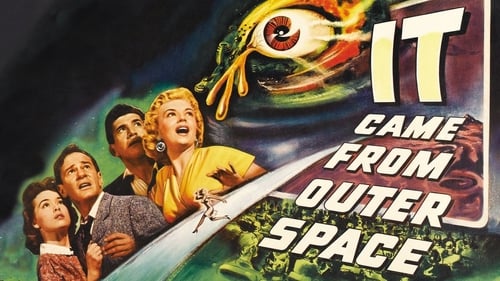





The impulse to destroy what you can’t grasp is immediately apparent. A spacecraft descends into the desert landscape, initially mistaken for a meteorite. Small-town scientist Richard Carlson gains access to the damaged vessel before it's completely covered by the expanding crater left from its impact. His claims are dismissed, but when the aliens begin mimicking human appearances, others are forced to acknowledge the situation before it’s past saving. It Came From Outer Space is among the stronger science fiction films produced during the Cold War era of the 1950s. Adapted from Ray Bradbury's "The Meteor," the narrative emphasizes themes of nonconformity and asserts that being different is something people should embrace—a sentiment I find agreeable. Like many other movies in the science fiction/alien category, it effectively conveys the anxieties prevalent at the time, a pervasive sense of distrust characteristic of the atomic age, and an apprehension about the desert environment that’s particularly striking here. Directed with skill by genre filmmaker Jack Arnold ("This Island Earth"/"The Incredible Shrinking Man"), the film was originally presented in 3D. While I haven't had the opportunity to view it in that format, I can easily picture how certain moments would have been impactful. The movie is also distinguished by its use of a point-of-view perspective from the aliens—a blurred image through a single, round eye—which works remarkably well and would later be adopted by numerous other filmmakers. The film doesn't depend on showcasing monsters to succeed; in fact, we see very little of them. However, that’s not necessary because their presence is felt nonetheless, making It Came From Outer Space a thoughtful and often clever production. 8/10
On September 25, 2026
#9625▲ 13096
9625th by Pulse movie online35.4PULSEPulse MeterOur daily Pulse Meter measures public activity and popularity signals across the web.How it works →