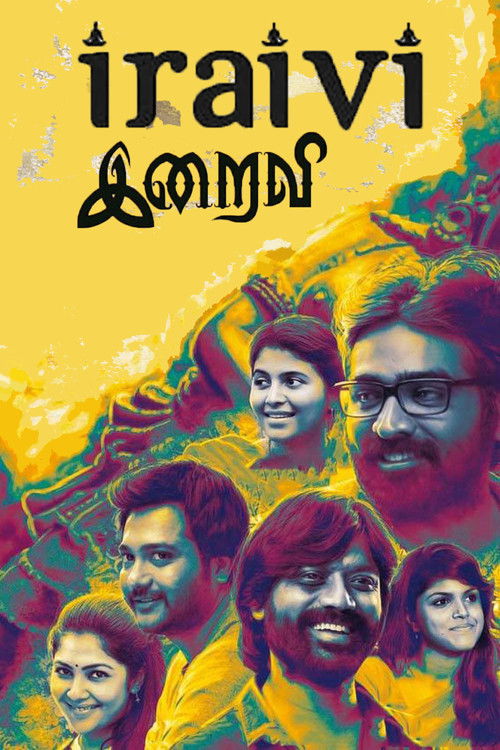




Iraivi marks a significant step for Karthik Subbaraj, moving him from a director known for visually striking films to a filmmaker worthy of serious consideration. While Pizza and Jigarthanda highlighted his directing abilities, Iraivi truly demonstrates his skill as a writer. This doesn't mean the film lacks visual appeal; it’s equally impressive in that regard. It stands out as one of the most compelling dramas to emerge from Tamil cinema recently. The story centers on three men and how their actions affect not only their own lives but also those of the women around them. Arul, played by SJ Suryah in a fantastic performance, is consumed by frustration when his film remains unfinished due to conflicts with an ego-driven producer, Vijai Murugan. Michael (Vijay Sethupathi), delivers unwavering support to Arul and his family, even disrupting intimate moments without hesitation. Jagan, portrayed effectively by Bobby Simhaa, and Arul’s brother, is perhaps the only male character who sees these men clearly. Having witnessed his own father mistreating his now comatose mother, he's angry about how women are treated and desires a better life for them. However, he fails to recognize that his actions appear condescending rather than empowering. The film’s female characters also face their struggles. Arul’s wife, Yazhini (Kamalinee Mukherjee), is torn between staying with her alcoholic husband or starting over. Ponni (Anjali) understands she's married a man who doesn’t truly love her but continues on because that's what women are expected to do. Malarvizhi (Pooja Devariya) is upfront about Michael being merely a friend with benefits, despite his declarations of love, and uses him to fulfill her needs. Karthik’s writing feels like a novel, giving each character their own detailed development—it's a film that rewards repeated viewings. The pacing never feels rushed; scenes are allowed to unfold naturally, providing time for reflection before moving forward. He also incorporates clever recurring motifs throughout the story. For example, just prior to intermission, scenes suggest hope for these characters, which is then abruptly shattered with symbolic force. This same pattern repeats at the climax and even extends to the film’s credits. The opening acknowledges inspiration from K Balachander, Balu Mahendra and Sujatha, while the ending pays tribute to Sujatha's Jannal Malar. The film also contains autobiographical elements, similar to Jigarthanda. In that earlier work, it involved a filmmaker forced to compromise. Here, the conflict between Arul and his producer mirrors the struggles faced during the making of Jigarthanda. A line from the film, "Nee padaippaali pa. Aathiram kobam ellaam un ezhuthula kaatu," seems to directly reference this experience. The visuals are also noteworthy. Sivakumar Vijayan’s cinematography is so subtle that its impact often goes unnoticed (such as the frequent use of rain in key scenes). Visual cues like a prison uniform falling from a clothesline symbolize release, and a monkey toy highlights indecision—all seeming to echo the style of KB. The musical score by Santhosh Narayanan feels somewhat unnecessary, but even these moments are integrated into the film’s narrative, with Karthik playfully mocking the notion that song-less films automatically equal artistic merit ("Paadinaale art illa commercial nu sollrangale da"). However, the plot twist proves disappointing. The reason behind one character's actions leading to another's downfall feels contrived. Furthermore, the visual presentation of this revelation is unoriginal. Most importantly, it suggests that the director lacked complete faith in his writing and reverted to a plot device that had previously served him well. Additionally, a subplot involving stolen idols appears to have been added simply to inject some excitement into what is fundamentally a relationship drama. Despite these shortcomings, the film’s attempts at portraying female empowerment are conveyed through dialogue—"Poruthukarathukkum sagichukkardhukkum naama enna pombalaya," "Ponna irundha solla koodadhu — ketta vaartha-da ingellaam," “Aan nedil, penn kuril” and so on. The question remains whether these women ultimately find a better place in life—perhaps, perhaps not. With the exception of Malar, the female characters seem to require male intervention and lack agency. One character (Vadivukkarasi) is rendered passive, lying comatose. Even Malar, despite her outspokenness, appears vulnerable when ending her relationship with Michael. It’s possible Karthik intended to create a women empowerment film that avoided overt messaging, opting for subtlety instead—though he only partially succeeds in this endeavor.
On September 25, 2026
#57772▲ 5134
57772nd by Pulse movie online9.1PULSEPulse MeterOur daily Pulse Meter measures public activity and popularity signals across the web.How it works →














