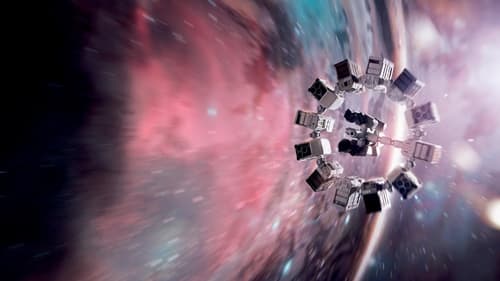





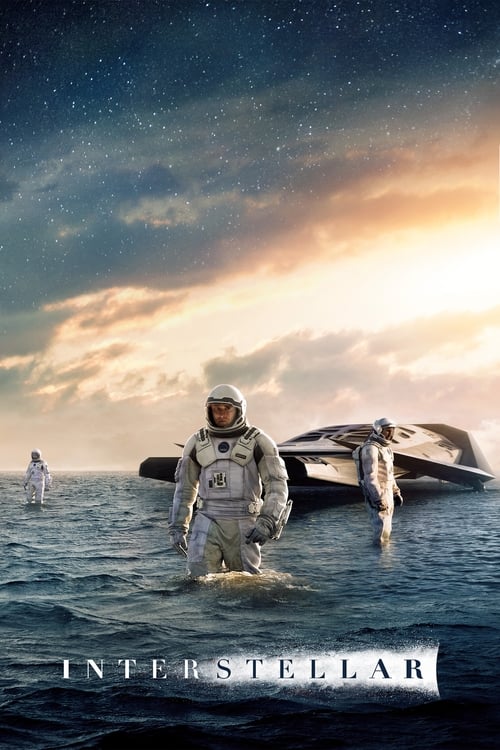
I was looking forward to seeing this film alongside 'The Battle of Five Armies', and as a fan of Chris Nolan’s work, I anticipated experiencing it on the big screen in 3D. However, my initial disappointment at its lack of that format quickly faded. This science-fiction story felt more dramatic than typical tales of space exploration, blending adventure and thriller elements into an almost three-hour runtime that moved the narrative forward efficiently. Prepare yourself for a rare journey through space with logical explanations underpinning everything you witness on screen. The research was clearly extensive, resulting in mature and intelligent writing—all credit goes to the Nolan brothers, particularly Jonathan, who shows great promise within the entertainment industry. While many enjoyed 'Inception', I found it to be a straightforward action movie with multiple layers. However, the concepts utilized in that film now make more sense within the context of this new picture. A basic understanding of how the universe functions is helpful for grasping the scenes and situations unfolding before you; it’s essentially presented as a documentary style concept enhanced by characters and their emotions. It's an educational movie suitable even for those seeking pure entertainment, although some may find the deliberate pacing challenging. The film opens with echoes of Shyamalan's 'Signs', depicting a family living amidst cornfields, then transitions through elements reminiscent of 'The Astronaut Farmer,' 'Gravity,' and finally, 'Inception.' These references highlight the constant shifts in setting that occur roughly every half hour—the opening scene contrasts starkly with the ending, spanning over a century. As mentioned earlier, the story revolves around a family’s journey alongside humanity's future, decoding universal mysteries through space and time travel. It might appeal to those who found '2001: A Space Odyssey' dull; it is cleverly written, especially for science enthusiasts. While I can’t confirm its complete accuracy regarding current astrophysics, the movie remains accessible to a broad audience while incorporating commercial elements for entertainment. The first three-quarters of the film were exceptionally well-crafted, creating an immersive experience akin to listening to a lecture by Brian Cox in a television series. Despite the significant amount of science involved, human emotions are also powerfully portrayed, something unexpected from a Nolan film. These weren’t subtle feelings but strong enough to evoke both joy and sadness. I appreciated the combination of scientific exploration and emotional depth; it truly saved the movie, which otherwise would have felt like a straight-out NASA production directed by Nolan. The film contains surprising elements and a twist ending, unfolding in layers similar to its narrative structure. The final act feels abruptly disconnected from what came before, rushing toward an unexpected conclusion that echoes ‘Inception.’ It’s as if the first 75% resembles 'The Tree of Life,' while the remainder is reminiscent of 'Inception.' ‘‘This world's a treasure, but it's been telling us to leave for a while now.’’ All the actors delivered strong performances; Matthew McConaughey particularly stands out, dominating much of the screen time. Anne Hathaway and Mackenzie Foy also shine, while the supporting cast—including Matt Damon in a crucial role—were well-integrated into the story. Like 'Contact,' which was undermined by its fantastical ending, this film initially adopts a realistic approach grounded in current scientific understanding but ultimately falters with an implausible resolution. While it functions thematically within the cinematic narrative, I found it disappointing given the wonderfully written preceding events; time travel itself presents an inherent logical problem. Nevertheless, the movie redefines the concept of ghosts through a scientific lens—it’s not horror, but the merging of supernatural forces and science fiction is compelling, expanding our understanding of physics beyond current limitations. Nolan deserves praise for prioritizing his vision over commercial considerations, transforming complex scientific concepts into a visually engaging experience infused with human emotion. It has the potential to supplant '2001: A Space Odyssey' for some time until another film achieves something similar. I couldn’t have asked for a better space travel drama, and I was confident Nolan would deliver a remarkable science-fiction film. He remained true to both the science and the exploration of human feelings throughout. Those familiar with previous films might recall moments reminiscent of Tom Hanks' roles in 'Cloud Atlas,' but this movie stands independently as something entirely new. ‘‘Maybe we’ve spent too long trying to figure all this out with theory.’’ The ending suggests a possible sequel, which I would welcome—though it would undoubtedly be a very different film given the way this one concludes. His fans and myself alike hope for that possibility. While the visuals weren't groundbreaking, they were certainly well-executed. Experiencing them in 3D would have enhanced the impact, but Nolan chose not to utilize that technology. I anticipate widespread recognition at the Oscars, particularly if it’s overlooked for a best picture nomination, which would be a shame. As with all of Nolan’s films, this one practically sells itself—a hot commodity—and you shouldn't miss out on the conversation your friends will be having about it. It is a must-see for any serious movie fan.
On September 22, 2026
#48▲ 2
48th by Pulse movie online71.0PULSEPulse MeterOur daily Pulse Meter measures public activity and popularity signals across the web.How it works →