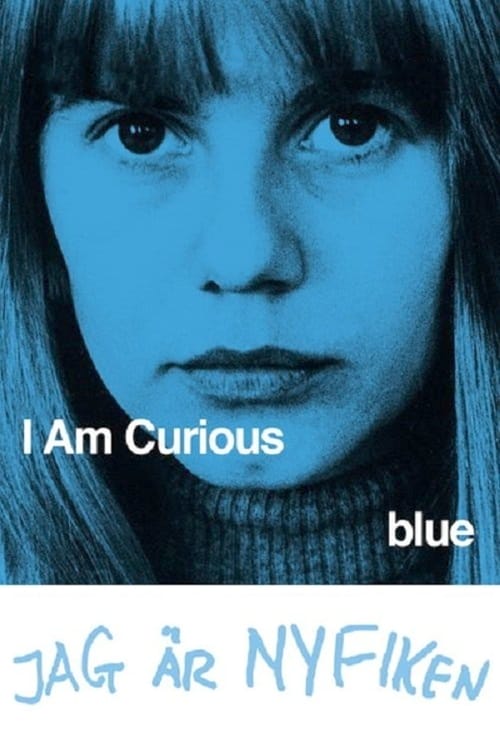





During the 1960s, Sweden experienced significant societal shifts, transitioning from a structured and traditional culture—similar to what audiences might have witnessed in Ingmar Bergman’s early works—to a period where long-held sexual restrictions loosened and class conflict emerged, mirroring developments in other Western European nations. Swedish filmmaker Vilgot Sjöman aimed to capture these evolving social norms (and perhaps even accelerate further change) through his pseudo-documentary project, *I am Curious*. He developed the script largely through improvisation and amassed enough footage to release it as two separate films: "Yellow" in 1967, followed by "Blue" a year later—titles referencing the colors of the Swedish flag. This assessment considers both installments. The primary performer in these films is Lena Nyman, who portrays…Lena Nyman, a 22-year-old drama student already deeply involved in sexual exploration and political activism. From her home with her alcoholic father, she operates what she calls the Nyman Institute, maintaining an extensive collection of files and traveling across Sweden with a microphone to record people's reactions to provocative questions such as "Does Sweden have a class system?" and (to tourists returning from fascist Spain) "What do you think about Franco?". She engages in turbulent relationships, primarily sexual, with the sophisticated Börje (Börje Ahlstedt) and the idealistic bohemian Hasse (Hans Hellberg). A further layer exists within the films, showing Vilgot Sjöman directing his actors and initiating a romantic relationship with his leading actress—though even this aspect is presented as fictional. It’s remarkable to see everyone involved, director and performers alike, portraying fictional versions of themselves on two distinct levels. The two films have a complementary dynamic, addressing similar subjects but in varying proportions. "Yellow" focuses more intently on political commitment and non-violence within the context of the Cold War, criticizing the hypocrisy of the Swedish left (which had become stagnant and no longer represented a force for social change) and the monarchy. This film is largely set in Stockholm and explores Lena’s home life. “Blue,” conversely, investigates themes of religion and the prison system, and spends more time in rural areas where some of the attitudes of people living outside the capital are revealed. Upon their release, these films (particularly "Yellow") were condemned as pornography, and Sjöman was labeled a lecher—despite the fact that it was Nyman’s suggestion to include a subplot about the director seducing his lead actress. However, the nudity and sexual content aren't intended to be alluring; instead, they are simply among the many sociocultural themes that Sjöman sought to present, as unremarkable as any real documentary. Moreover, Sjöman wasn't actually a lecher—within countercultural circles, he may have been ahead of his time in recognizing that increased permissiveness could also mean men finding it easier to pressure women into sexual encounters by accusing them of being prudish if they refused, an observation that didn’t occur to many 1960s idealists until the following decade. Sjöman also critically examines the New Left by illustrating how those who advocated for non-violence could be harsh in their personal relationships with friends and family. I had previously only seen "Yellow" a few times and was prepared to rate it as an interesting four-star documentary about 1960s Sweden, but lacking something that would truly resonate with me. However, obtaining the DVD set and finally watching “Blue” provided that emotional experience; it’s quite impressive how Sjöman connected the two films with just enough overlap to create a convincing whole. There's also some subtle humor that only becomes apparent when both are viewed together.
On September 29, 2026
#99304▼ 147
99304th by Pulse movie online0.1PULSEPulse MeterOur daily Pulse Meter measures public activity and popularity signals across the web.How it works →