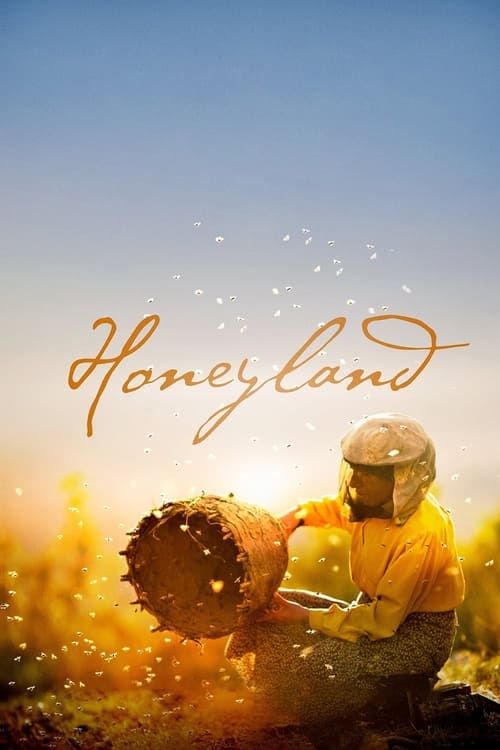




Both "Honeyland" and Greta Thunberg have drawn strikingly divided reactions from audiences, with some praising them while others expressed harsh criticism. This alone demonstrates that they’ve achieved their purpose: to influence discussions on issues often ignored by society, leaders, and individuals. I am hopeful that we are entering a new period where the focus shifts away from trivial entertainment and fleeting events. Currently, our societies tend to elevate athletes, celebrities, and figures of privilege. Perhaps now is the time for ordinary people—those who work quietly like Greta Thunberg and "Honeyland," along with its creators and protagonist Hatidze—to become a driving force in society, inspiring significant change and establishing themselves as heroes of a new age. Hatidze, the last beekeeper of wild bees in Europe, embodies universal values recognized across cultures, religions, philosophies, and spiritual beliefs, likely passed down through generations. Respect for nature, humility, moderation, and compassion are subtly present throughout the film. Hatidze’s affection for the bees is evident; she shares her honey with them—half for people, half for the insects—a remarkable example of sustainability. It's not surprising that "Honeyland" is the first documentary ever to compete in the Best International Feature Film category at the Oscars, alongside fictional works. The filmmakers deserve credit for elevating a documentary to an artistic level comparable to a feature film. An unusual moment in the movie elicits contrasting interpretations. Hatidze’s call to the bees—"Maat, mat, mat, mat"—some viewers found off-putting, with one saying they "turned it off." Others, like Dutch film critic Belinda van de Graf, described it as “Hatidze is singing to the bees.” I personally found that moment deeply poetic. The call from Hatidze, Maaaat, mat, mat, mat, derives from the word *matica*, meaning queen bee (from Latin *mater*, *matrix*). It’s notable that while Hatidze typically speaks Ottoman Turkish, *matica* is also a Macedonian term—an archaic word that transcends modern languages. This raises an intriguing question: what kind of connection allows a simple insect, the queen bee, to recognize these words as a friendly call from a human, despite the profound biological differences suggested by Darwin’s Theory of Evolution? I recall seeing the trailer last spring and being immediately struck by Hatidze's call. It brought back memories of my childhood in a Macedonian mountain village where my grandmother explained how bees were kept in woven baskets similar to those used by Hatidze, and included recognizing the call to the queen bee, Maaaat, mat, mat, mat, which gently gathers the bees. Suddenly, everything clicked into place: when Hatidze sings this "mantra," she identifies herself with the queen, assuming her role—calling, gathering, communicating just as the queen would; in essence, becoming the queen bee. It's an incredible symbiosis between humanity and nature. Through this story, I want to express my admiration for the film, its creators, and the audience who recognized that there is no such thing as a successful or unsuccessful life, an important or unimportant person, or a significant or insignificant story—all lives are unique experiences. The movie illuminated what appeared to be a simple existence, elevating and glorifying an ordinary individual who proved to be deeply ethical, pure, loving toward people and nature, and simply beautiful, just like the film itself.
On September 30, 2026
#6162▼ 548
6162nd by Pulse movie online6.5PULSEPulse MeterOur daily Pulse Meter measures public activity and popularity signals across the web.How it works →