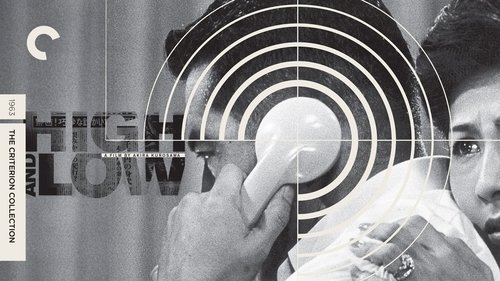





It's remarkable how a film can be interpreted in so many different ways, which makes sense when it combines various elements, each with its own validity that can lead to differing overall understandings. This is certainly true of this 1963 classic from renowned Japanese director Akira Kurosawa, the inspiration for filmmaker Spike Lee’s recent reimagining, “Highest 2 Lowest,” now in theaters. Like the newer film, “High and Low” centers on a wealthy businessman, Kingo Gondô (Toshirô Mifune), who is trying to take control of the shoe manufacturing company he works for—a plan that requires him to use all his personal money to make it happen. However, just as he’s about to finalize the deal, he's thrown by what seems to be the kidnapping of his young son (Toshio Egi), a crime where the kidnapper demands a ransom equal to the funds needed for the transaction. Soon after hearing about this, Gondô discovers that the wrong child was taken—the son (Masahiko Shimazu) of his chauffeur (Yutaka Sada). But Gondô isn’t off the hook: the criminal still wants the ransom, even though the crime doesn't involve his own son. This puts Gondô in a difficult moral position: should he use the money for his business deal or pay the ransom for his employee’s child? As Gondô struggles with this decision, an intense police investigation begins to identify the kidnapper and recover both the victim and the ransom money. Unlike the current film, Kurosawa's version focuses less on the details of what led to this situation and more intensely on the ethical questions that the protagonist faces—issues ultimately symbolic of the divisions in Japanese society regarding class and economics. Indeed, while the movie offers viewers its share of suspenseful thriller moments, it’s largely a morality play, not just concerning Gondô but also in its exploration of the vast differences between the wealthy and the poor, those with privilege and those without, and control versus servitude. (This aspect helps to illuminate the nature of the film's character and the relevance of its original Japanese title, “Tengoku to jigoku,” which translates to “Heaven and Hell,” a more appropriate name that likely should have been kept when it was renamed in English.) These elements distinguish this earlier work from the current release, even though the precise connection between kidnapper and victim isn’t developed as thoroughly as I think it could be (one of the few ways in which the new film slightly improves on the original). Also, there are moments in the beginning and leading up to the film's end when the storytelling might have been a bit quicker—though this is due to the slower pacing style common during the period the picture was made. Nevertheless, the movie’s social and cultural themes are fascinating, and their presence tends to grow on audiences as it unfolds. And those thematic elements, combined with the narrative's gripping criminal investigation, create an intriguing combination, which probably explains the varying opinions this release often provokes among viewers. While “High and Low” might not be Kurosawa’s finest work when compared to films like “Rashômon” (1950) and “Ikiru” (1952), it stands out as one of his most thoughtful and engaging, probing the heaven and hell that exist on Earth, both individually and where they intersect, and how easily the lines between them can become blurred—a caution to us all.
On September 25, 2026
#13953▼ 6566
13953rd by Pulse movie online29.6PULSEPulse MeterOur daily Pulse Meter measures public activity and popularity signals across the web.How it works →