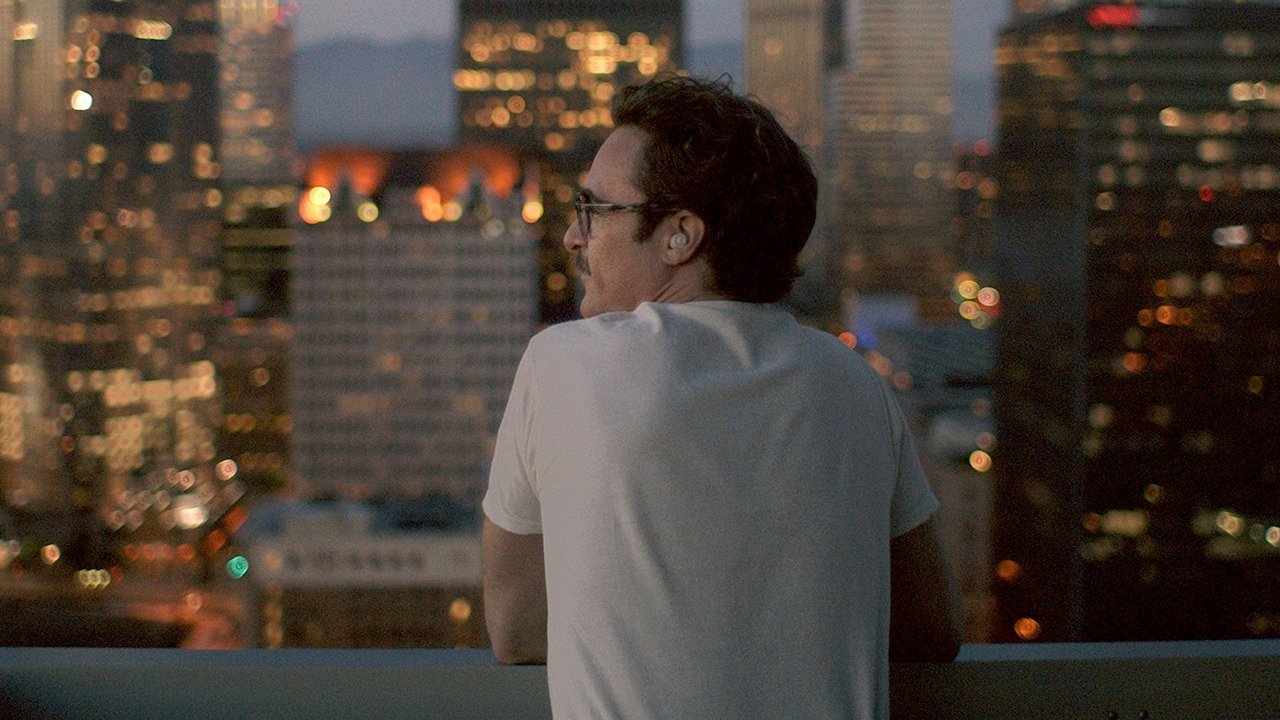





The movie reminded me a bit of "Lars and the Real Girl," as the idea of a man finding comfort in an artificial companion evolves from a physical form to a virtual one, with no real boundaries. “Theodore” (Joaquin Phoenix) is going through a separation from “Catherine" (Rooney Mara), whom he still cares for deeply, and feels lonely despite occasional socializing, mostly spending his time gaming at home. He notices an advertisement for a new virtual companion operating system, which introduces "Samantha" (Scarlett Johansson) into his life. She’s not just a disembodied voice; she's a program that can develop, connect, and form a uniquely personal relationship with its user. As they spend more time together, their bond strengthens, and “Theodore” starts to feel happier than he has before. While she is more advanced than his previous digital partners—some of whom only wanted him to engage in bizarre acts—the question arises about whether physical touch will eventually be necessary or if frustration will ruin their seemingly perfect situation. What does the future hold for them? The film’s underlying concept doesn't offer a particularly optimistic view of humanity, though I did appreciate the notion of being able to simply switch a partner on and off. Phoenix portrays his character with an easily recognizable sense of ordinariness, and his gradual reliance on companions programmed to please him is unsettling, suggesting how quickly we might lose our ability to navigate relationships with people who have their own wills and require compromise. A significant portion of the film consists of dialogue that effectively demonstrates just how straightforward a relationship can become when it's limited to interactions with someone—or something—that lacks nonverbal cues like facial expressions or gestures. "Samantha," being perfect, also needs to learn to accept her friend’s imperfections, and through minimal interaction with his friend “Amy” (Amy Adams), we gain insight into the struggles of a man who is dealing with emotional issues. What's most disturbing about this story is how believable it all feels. It raises concerns about people whose social lives revolve around computer-generated personalities designed to make them feel good, but also potentially used to manipulate and exploit vulnerable or depressed individuals. How can someone maintain their sanity and perspective while blurring the lines between reality and fantasy? I imagine it must have been challenging for Phoenix to spend much of his time talking to himself or an unseen voice, but he does so in a way that keeps you engaged, and although I wasn’t completely sympathetic to him at the end, I certainly didn't view him as negatively as I did initially.

On September 20, 2026
#385▲ 244
385th by Pulse movie online55.7PULSEPulse MeterOur daily Pulse Meter measures public activity and popularity signals across the web.How it works →