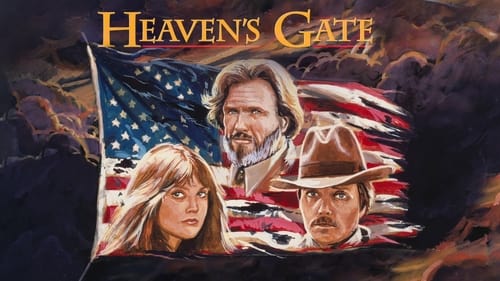





Michael Cimino’s sprawling Western about the Johnson County War has been unfairly criticized by many reviewers. Around 1890 in Wyoming, wealthy cattle ranchers with government approval hire mercenaries to eliminate people suspected of rustling—though a number of those targeted are innocent settlers. A well-born marshal (Kris Kristofferson) takes the side of these impoverished newcomers and also finds himself involved with a French madam (Isabelle Huppert), who is also being pursued by one of the stockmen’s top enforcers (Christopher Walken). “Heaven’s Gate” (1980) became infamous when it financially crippled a studio. Cimino's filmmaking style emphasizes realism and artistic touches, which reminds me somewhat of Francis Ford Coppola. I didn’t care for his earlier film, “The Deer Hunter” (1978), because the opening hour felt drawn out and the focus on Russian Roulette was unpleasant—though I do enjoy his “Thunderbolt and Lightfoot” (1974), which has a similar feel to something Quentin Tarantino might create. Cimino made a smart choice in not letting the Harvard graduation scene that opens "Heaven’s Gate" drag on like the wedding sequence in “Deer Hunter,” and it's visually appealing as well. There are two versions of the movie: The original New York City showing lasted 3 hours, 39 minutes, while a shorter version (approximately 2.5 hours) appeared in theaters five months later. Critics have said that the story doesn’t make sense, but it's actually quite straightforward with just a few central characters. I never felt lost or confused about what was happening and watched the shortened film. The cinematography and locations are excellent. Whether you like it will depend on your taste for Cimino’s artistic, mature, and realistic approach. Regardless, everything builds toward an exciting final sequence. When “Heaven’s Gate” came out, there was a strong negative reaction from critics, but much of the criticism seems insincere as reviewers seemed eager to join in the condemnation. For example, some have complained that the film is visually unappealing because of dust and smoke. However, I found the visuals impressive despite those elements. Roger Ebert noted that a character in a burning cabin who believes he’s dying writes a note and signs his full name before escaping and being shot; but the actual person involved kept a journal documenting the siege and signed it before his death. Ebert also criticized a scene where a gunman enters a house and shoots three men assaulting a woman, with the woman surviving unharmed. However, that man is actually a marshal who’s highly skilled with firearms. What's the problem? Another complaint is that the antagonists could have easily avoided being defeated by going around or behind an armored wagon; but the settlers would have simply shot them down if they had exposed themselves like that. It seems obvious to me. The film was shot in Montana (Kalispell, Glacier National Park, Blackfeet Indian Reservation, etc.), with scenes set in Wyoming filmed in Wallace, Idaho, and the Harvard sequence shot in England. GRADE: B/B-
On September 25, 2026
#2425▲ 5690
2425th by Pulse movie online48.5PULSEPulse MeterOur daily Pulse Meter measures public activity and popularity signals across the web.How it works →