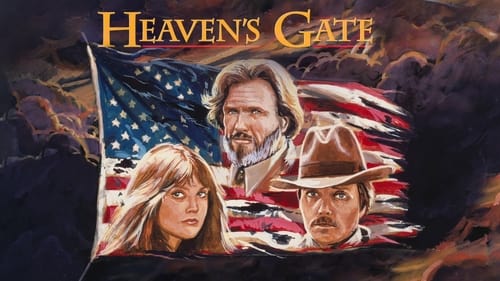





Barbed wire and women are reportedly two of the most significant forces for civilization. Heaven’s Gate was written and directed by Michael Cimino and stars Kris Kristofferson, Christopher Walken, Isabelle Huppert, Jeff Bridges, John Hurt, and Sam Waterston. The film's music is composed by David Mansfield, with cinematography by Vilmos Zsigmond. The story centers on the real-life Johnson County War in 1890 Wyoming, depicting a wealthy Sheriff attempting to protect immigrant farmers from a powerful Stockholders Association. It’s best to research the financial problems surrounding Heaven’s Gate and their impact on studios and filmmaking—it's quite a significant story. Also, it should be noted that this isn't an accurate depiction of the Johnson County War (when are large-scale historical films ever truly authentic anyway?), so some background reading is worthwhile. The film received overwhelmingly negative reviews when it was first released, especially considering the theatrical version shown to critics was significantly shorter than Michael Cimino’s intended length. Fortunately, viewers can now see the complete, longer version—a running time of three and a half hours. While accusations of self-indulgence against Cimino are valid, his vision results in a potent and meditative (anti) Western epic with a distinct focus. Cimino doesn't rush the narrative, which is appropriate as he takes time to develop characters and slowly build the tension that led to the Johnson County violence. Before even considering the technical aspects of the film, there’s a strong emotional undercurrent running through the story, an intimacy that captivates those invested in the first half—preparing them for the excellent second half. I often wonder how many of those who gave it a 1/10 rating actually made it to the second part, when a group of hired assassins appears and begins their campaign of murder and sexual assault. Visually (with Zsigmond at his best), the film combines elegiac tones representing the hopes and dreams of immigrants seeking new lives with the gritty realism of financial greed and oppression from wealthy corporate stockholders. Cimino demonstrates skill in constructing sequences, including community dances reminiscent of those John Ford would have appreciated. Notably, there’s a lively roller derby dance gathering showcasing a community celebrating its shared identity. The main battle sequence was unfairly criticized by some original reviewers; it's an impressive display—a whirlwind of dust and circular carnage (circles being a recurring theme for Cimino). “Those god damned Romans,” indeed. Of course, the film isn’t flawless. The first thirty minutes, featuring Averill (Kristofferson) and Irvine’s (Hurt) Harvard graduation, feel slow and could have been trimmed by twenty minutes. It's also noticeable that both actors appear older than their roles would suggest. The cast is mostly well-chosen, but Huppert, while possessing some intriguing qualities for a brothel worker, feels slightly miscast in the love triangle aspects of the story and genre conventions. At times, the dialogue lacks authenticity to the 1890s setting, and the script requires careful attention or you might lose track of what’s happening. Sadly, it also reveals some obvious animal rights concerns that Hollywood has thankfully moved past since then. Is it a flawed masterpiece? Yes, I think so, especially when revisiting it nearly forty years after its disastrous initial release. It's a lyrical and majestic work that has seen its reputation improve as new critics and film enthusiasts re-evaluate it. The themes explored—debunking American mythology and more—were too challenging for many viewers in 1980, but now the film stands proudly as a bold, beautiful, and brutal piece of cinema, flaws and all. 8/10
On September 25, 2026
#2425▲ 5690
2425th by Pulse movie online48.5PULSEPulse MeterOur daily Pulse Meter measures public activity and popularity signals across the web.How it works →