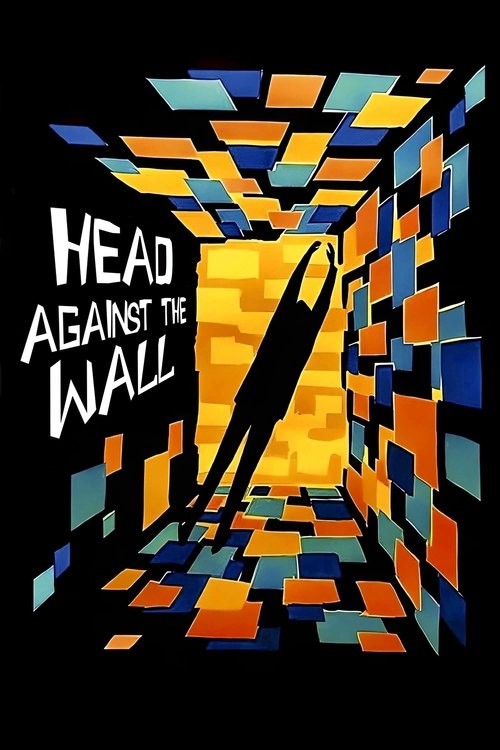




The notion of escape can be deceptive. La tête contre les murs (also known as The Keepers/Head Against the Wall) is a film directed by Georges Franju and written by Jean-Pierre Mocky, based on a novel by Herve Bazin. It features performances from Mocky himself, Pierre Brasseur, Paul Meurisse, Anouk Aimée, Charles Aznavour, and Jean Galland. The score is composed by Maurice Jarre, with cinematography by Eugen Schüfftan. François Gérane (played by Mocky) is considered unstable by his father and subsequently committed to a psychiatric institution. Inside, he encounters two doctors who hold contrasting views on how mental healthcare should be administered. As François struggles to maintain his sanity, he finds comfort in a friendship with fellow patient Heurtevent (Aznavour) and the visits from Stéphanie (Aimée). The question remains whether he will ever be released, and if so, whether he’ll retain his mental equilibrium. Jean-Pierre Mocky had initially intended to direct the film himself, but Franju's involvement proved to be a remarkably successful collaboration. Mocky’s youthful energy and understanding of Gérane’s situation blend seamlessly with Franju’s poetic style. At its heart, the story examines shortcomings in psychiatric treatment during that era, with the conflict between two doctors serving as a central point. The narrative is rooted in reality; the novel's author, Herve Bazin, was himself institutionalized by his family. This lends a disturbing sense of authenticity to the film, and Franju’s creation of an unsettling atmosphere often evokes the feeling of experiencing a vivid nightmare. This sounds like a flock of birds taking flight! Technically, the film comes close to being exceptional; the sharp black-and-white photography strikingly highlights Franju's eye for unusual details. There are many stark images throughout, with patient-made models and the hospital cemetery proving particularly unsettling. The interior of the institution feels cold, with a chessboard floor emphasizing the lifelessness of the walls. Outside, the building appears foreboding, especially at night when it transforms into a Gothic place concealing untold secrets. Certain scenes linger in your memory, for good or ill. A suicide, an act of violence, an attempt to flee through a burning field, the two doctors debating their ethical beliefs before a cage of doves, recurring shots of patients within their environment, and a devastating noir conclusion—the film consistently commands attention both visually and narratively. Jarre’s musical score is unusual, shifting between eerie, cheerful, melancholic, or simply strange, complementing the story perfectly. The cast delivers strong performances across the board, particularly Aznavour. It's intelligent, challenging, and bold filmmaking. 8/10 The Masters of Cinema DVD release presents a beautifully restored print that does justice to Franju’s and Schüfftan’s talents, and the 48-page booklet is quite impressive. Unfortunately, the supplementary materials are somewhat disappointing. Two interviews with Mocky and Aznavour from 2008 run for just over 13 minutes combined; Aznavour's contribution is only four minutes long and barely touches on the film itself. While Mocky’s interview is insightful, offering glimpses into the making of the film, its importance, and some unsettling events during production, its nine-minute length leaves you wishing there was considerably more.
On September 29, 2026
#55572▲ 3365
55572nd by Pulse movie online0.4PULSEPulse MeterOur daily Pulse Meter measures public activity and popularity signals across the web.How it works →














