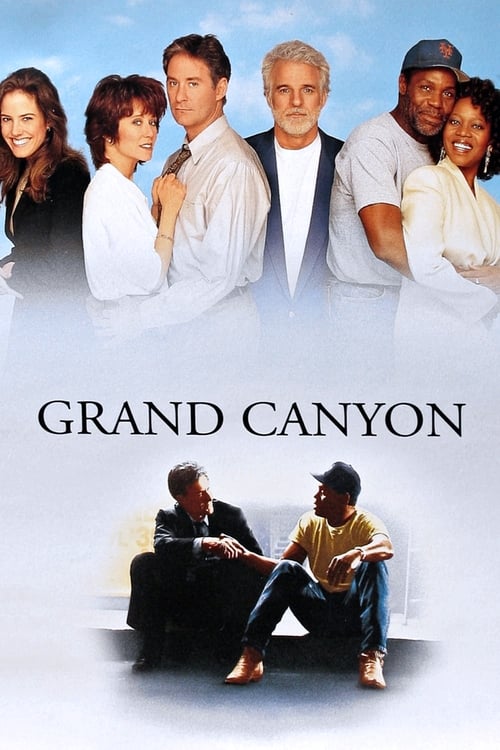




“Grand Canyon” (1991) explores the divisions present in American society—the disparities between different racial groups and those with wealth versus those without. The film begins with a powerful scene where middle-aged lawyer Mack (Kevin Kline) makes an unfortunate detour in Los Angeles, encountering threatening individuals before being assisted by a tow truck driver, Danny Glover. This encounter sparks a relationship that positively influences both men’s lives and the people connected to them. A subplot revolves around Mack's attraction to women; as any man might, he experiences desires outside of his marriage, which is beginning to feel empty due to the challenges of raising grown children. There's a notable early scene where a potential romantic interest (Mary-Louise Parker) touches him in his office—a simple yet impactful moment. It raises questions about whether Mack’s feelings are justifiable and if he should risk damaging his marriage by pursuing an affair, and if he does, can he change his mind? Will he? This is just one of many storylines; some critics have noted that there appear to be too many narratives unfolding simultaneously. I would suggest those viewers seek out something lighter in tone. The film examines a range of themes including unexpected life-saving encounters, race relations, the divide between the wealthy and working class, homelessness, and the reasons why young people join gangs. It also touches upon the difficulties faced by couples experiencing a lack of romance, the drive to improve one's financial situation, the potential impact of violence in film, and whether filmmakers have a moral obligation to society. The movie portrays life-altering experiences that aren’t quite as transformative as initially perceived, and poses questions about everyday occurrences like navigating downtown traffic or what to do after finding an abandoned infant. Other themes include divine intervention, matchmaking, and the way each person's actions affect others, highlighting humanity's significance while also contrasting it with the vastness of the universe. The film tackles a great deal, but manages to handle it effectively, feeling true to life rather than contrived. For example, during a teen’s driving lesson, he makes an error and then stops the car—already running. It’s something everyone has experienced. Another instance is with the filmmaker's girlfriend, Vanessa (Sarah Trigger), who shifts unexpectedly from being calm and happy to suddenly bursting into tears after a comment, leading to an uncomfortable emotional outburst. These moments feel genuine. Similarly, Claire’s reaction when her son asks about a potential divorce—her shocked response, "Why would you ask that?! Do we seem like a couple on the verge of divorce?"—reveals how perceptive children can be, sensing marital problems even if they aren't explicitly discussed. I’ve heard some people say there is no humor in the film. I disagree; there are quite a few amusing and light-hearted moments, especially considering Steve Martin is in the cast. Despite its serious nature, I found myself laughing or smiling on several occasions. Reviews of “Grand Canyon” tend to be polarized—viewers either love it or hate it. I am among those who appreciate it; the acting is excellent, and you become invested in the characters and their individual stories. One reviewer described the film as depressing, which I believe is inaccurate. While there are some troubling elements, watching it through to the end reveals a different perspective. Others have criticized Steve Martin’s beard, but that seems like a trivial complaint; he was perfectly cast. I appreciate that “Grand Canyon” respects the audience's intelligence—it isn’t dumbed down or overly explanatory. Some aspects require careful consideration, while others are left to interpretation. It prompts reflection on the issues it explores for days afterward, a rare quality in films. There is so much depth to "Grand Canyon" that you will likely discover something new with each viewing. When the film was first released, a New York Times critic famously labeled it as the worst movie ever made. However, who cares what someone from The New York Times thinks? Their position alone suggests their artistic judgment shouldn't be taken too seriously. Furthermore, while "Crash" (2004) was lauded as a masterpiece, it clearly drew inspiration from “Grand Canyon”; however, the latter film is superior. Although "Crash" has its merits, “Grand Canyon” proves more entertaining and inspiring. “Grand Canyon” is an exceptional film—a true masterpiece. It runs for 2 hours and 14 minutes and was filmed in the Los Angeles area. GRADE: A
On October 1, 2026
#27687
27687th by Pulse movie online2.3PULSEPulse MeterOur daily Pulse Meter measures public activity and popularity signals across the web.How it works →














