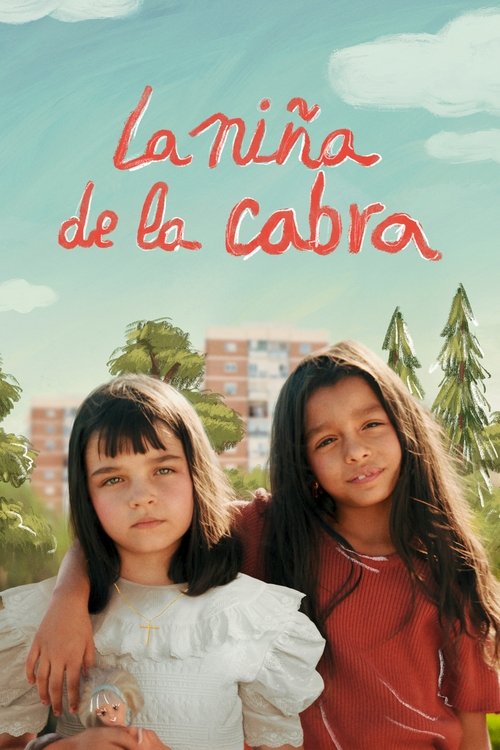




Navigating the complexities of modern life can be challenging for adults, so it's easy to imagine how bewildering it must be for a child—especially one who is perceptive, inquisitive, and searching for answers. When you consider an existence filled with rigidity, prejudice, indifference, deception, cruelty, conformity, hypocrisy, death, religion, unquestioning faith, and mysteriousness, not to mention adults who seem willing to accept these things, it’s understandable that a child might feel confused and uncertain about what to believe. This can lead to the adoption of inaccurate or superficial understandings. That's certainly the situation for eight-year-old Elena (Alessandra González) as she grows up in Madrid in 1988—a time, ironically, when the world was considerably less complicated than it is now. She’s naturally curious about her surroundings but frequently finds herself thoroughly perplexed, particularly when seeking explanations from her contentious parents (Lorena López, Pablo Pereira), who often provide inadequate responses and sometimes suggest they might be better off without her. This occurs while Elena grapples with the recent loss of her beloved, open-minded grandmother (Gloria Munóz), her parents’ refusal to let her befriend a kind gypsy girl named Serezade (Juncal Fernández), and preparations for her First Communion—a rite of passage for which she feels inadequately prepared by her rigid, condescending, yet hypocritical priest (Enrique Villén). Consequently, Elena is drawn to unconventional (some might call them “heretical”) ideas, a seed that had been planted in her mind by her grandmother. However, she isn’t so convinced of her own beliefs that she's ready to completely reject Roman Catholicism, despite its puzzling aspects and contradictions, which she’s expected to accept without question. She readily accepts some of the fears associated with these teachings, such as the notion that goats are symbols of the devil—a disturbing thought for her, given that Serezade’s best friend is her ever-present pet goat, Lola. Ultimately, though, the pressures of Elena's circumstances become overwhelming, and she runs away from home, hoping to live in the countryside with her gypsy friend and her family, where a series of new (and hopefully pleasant) experiences and adventures await. On the surface, this sounds like an intriguing story. Unfortunately, there are issues with how the narrative unfolds. The film tends to wander, featuring multiple plot threads that remain unexplained and seem somewhat unrealistic. Additionally, the movie’s tendency toward understatement is so pronounced at times that it's difficult to understand the significance of certain events (nuance is one thing, but obscurity is another). Essentially, writer-director Ana Asensio’s story and screenplay don’t feel substantial enough to fully explore the themes they are trying to convey. There are also several references to current events of the time that remain largely undeveloped, such as the widely publicized activities of ETA, the Basque Separatist Movement, and the organization's high-profile kidnapping of Emiliano Revilla. It’s unclear whether this is simply background information or something more significant, but in either case, it remains fundamentally obscure. And these shortcomings, perhaps, are the biggest drawback of “Goat Girl”: There just isn’t enough substance to make it a worthwhile viewing experience—no matter how charming and endearing that "devilish" little goat and girl may be.
On October 4, 2026
#88296
88296th by Pulse movie online1.1PULSEPulse MeterOur daily Pulse Meter measures public activity and popularity signals across the web.How it works →