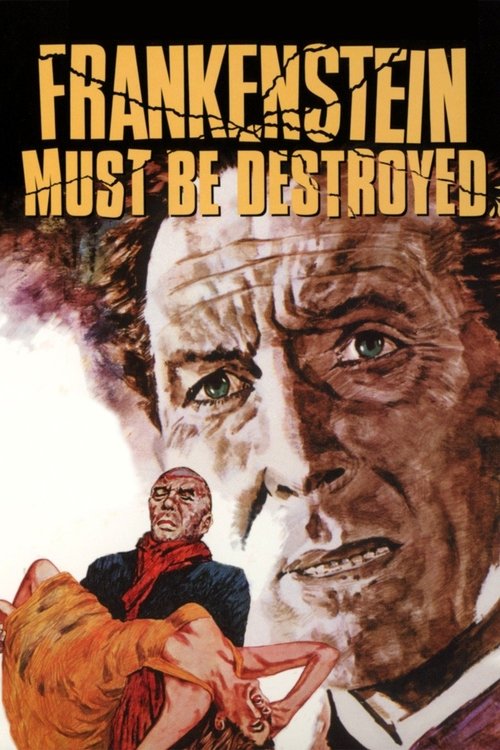




This is among the finest Frankenstein films I’ve come across. Hammer produced seven Frankenstein movies over 17 years, from the late 50s to the early 70s: 1. The Curse of Frankenstein (1957); 2. The Revenge of Frankenstein (1958); 3. The Evil of Frankenstein (1964); 4. Frankenstein Created Woman (1967); 5. Frankenstein Must Be Destroyed (1969); 6. The Horror of Frankenstein (1970); and 7. Frankenstein and the Monster from Hell (1974). Peter Cushing portrayed Baron Frankenstein in all of these except "The Horror of Frankenstein," as a younger actor was needed for a remake of the original story; Ralph Bates, who also played an excellent villain in “Taste the Blood of Dracula,” was selected. We're familiar with the core Frankenstein narrative: A scientist’s ambition to create life leads to success, but his creation turns violent, though it shows kindness toward children because they are innocent. Ultimately, the monster must be destroyed, and the Baron usually meets the same fate. I appreciate how "Frankenstein Must Be Destroyed" moves away from this familiar plot. The story follows Baron Frankenstein as a fugitive using an assumed name while still pursuing his gruesome experiments. He cleverly tricks a young couple into helping him, leading to them capturing a patient from the local asylum for surgical procedures. This is one of the best Frankenstein films I've seen; it’s inventive, complex and full of energy. As a sequel, it keeps the essential elements of the original story while developing it naturally. The true monster in this film is Baron Frankenstein himself; his obsession has corrupted him to the point where he displays hostility, hatred, arrogance, violence, rape, and murder. Regarding the brief scene depicting rape, I’ve always felt that it was shoehorned into the script to make the series seem more "cutting edge" during the height of the counterculture movement (1969). Essentially, it wasn't in character for Baron Frankenstein, but producers were concerned with keeping the series current and profitable in the late 60s. Still, one could argue that Victor’s moral decline and increasing arrogance are reflected here; this was the second-to-last film in the series (excluding “The Horror of Frankenstein,” which was a remake). Veronica Carlson stands out, bearing a resemblance to Ursula Andress but perhaps even more beautiful (if you can imagine it). The movie has a running time of 1 hour, 41 minutes and filming took place just northwest of London at EMI Studios, Elstree, and nearby Tykes Water Lake, as well as Stanmore Hall Lodge, Middlesex (Victor’s hiding place). Another excellent Frankenstein film from this era is the Italian “Lady Frankenstein,” which also offers a fresh take on Shelley's basic story. It was released in 1971 and features Rosalba Neri (aka Sara Bey) as the Baron's daughter who takes over his work after he dies; you can find more details in my review of that film. GRADE: A
On September 28, 2026
#17361▼ 1243
17361st by Pulse movie online26.2PULSEPulse MeterOur daily Pulse Meter measures public activity and popularity signals across the web.How it works →