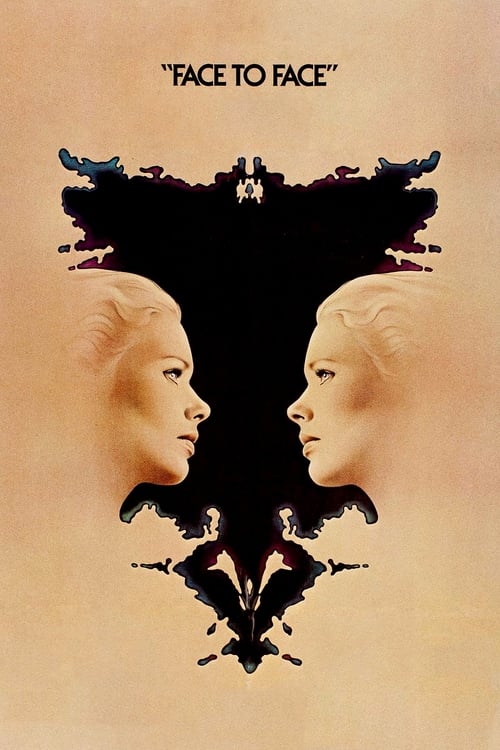




Filmed in 1975 for Swedish television, Ingmar Bergman’s ANSIKTE MOT ANSIKTE (Face to Face) examines a psychiatrist grappling with her own mental health issues. The movie begins with Dr. Jenny Isaksson (Liv Ullmann) standing in an empty house; her family has cleared it out in preparation for moving. Her husband is temporarily working in America, and their daughter is at summer camp. While awaiting the family’s reunion and move to their new home, Jenny stays with her grandparents—her grandfather poignantly suffering from dementia—and eventually takes a position at a clinic. Initially pleased to focus on her work, she soon finds the line between reality and delusion blurring, and the film traces her decline. I don't think of ANSIKTE MOT ANSIKTE as one of Bergman’s most important works. The shortened theatrical version feels disjointed and unfocused, making its two-hour running time feel longer than it needs to be. Unfortunately, the original television version hasn't been released, so audiences can’t experience that either. Furthermore, Bergman had previously explored themes of madness and the darker aspects of the mind, and in the latter portion of ANSIKTE MOT ANSIKTE, he falls back on familiar tropes. Even though it doesn't reach his highest standards, even a lesser Bergman film is worth seeing. Despite revisiting similar territory when depicting Jenny’s inner thoughts, there are moments where Bergman offers a fresh perspective on mental illness and the profound loneliness and shame that accompany it. Jenny experiences intense emotions but struggles to express them, feeling isolated as those around her fail to grasp what she's going through. The performances are excellent; Liv Ullmann conveys a wide range of emotional states. Erland Josephson also appears in a supporting role, playing one of the unsettling, almost demonic characters he portrayed so well. Interestingly, there’s an element that sets this film apart within Bergman’s filmography. Previously, his films were either historical pieces or intimate dramas centered on small, affluent groups with little connection to broader society and evolving social norms. Here, however, the outside world unexpectedly and rather bluntly enters a Bergman film: early on, Jenny attends a party hosted by an eccentric older woman (Sif Ruud) reminiscent of Cathy Berberian, who has taken two gay men under her wing. The men are stereotypical representations of homosexuals, with tight jeans and flamboyant gestures, and the gathering involves sexually suggestive folk dancing to music similar to Abba’s style. It seems Bergman may have been responding to younger filmmakers like Vilgot Sjöman, but this sudden glimpse into 1970s Sweden quickly fades as the film returns to more conventional Bergman themes.
On September 25, 2026
#23986▼ 10433
23986th by Pulse movie online20.5PULSEPulse MeterOur daily Pulse Meter measures public activity and popularity signals across the web.How it works →