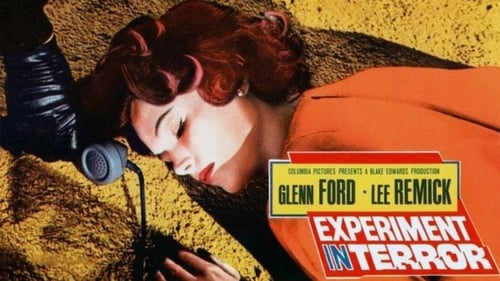





Operation Terror. Experiment in Terror comes from director Blake Edwards and features a screenplay by Mildred and Gordon Gordon, based on their novel of the same name. The film includes performances by Glenn Ford, Lee Remick, Stefanie Powers, and Ross Martin. Henry Mancini composed the music, with cinematography handled by Philip H. Lathrop. The movie opens with bank teller Kelly Sherwood (Remick) driving through nighttime San Francisco; overhead shots establish the city's setting. Henry Mancini’s unsettling score accompanies her drive until she reaches her home in Twin Peaks and enters her garage, where silence descends as she exits the car. She feels she isn’t alone, and that proves to be correct. A man whose face is hidden grabs her, covers her mouth, and speaks with an asthmatic voice, informing her he knows everything about her and her sister, and threatening pain, misery, and death if she doesn't comply. Her task: steal $100,000 from the bank where she works; he’s even offering a 20% cut—what a guy, huh? It’s an exceptional opening, combining stylish filmmaking with a thematic atmosphere of fear, tension, and sexual menace. What follows is a skillfully made movie, a genuine thriller focused on character development and building suspense through suggestion and conversation; there's no need for bloodshed here, as the threat and fear are consistently present. The police procedural elements of the story, featuring Ford’s dependable and stoic detective, are presented intelligently and remain captivating, particularly because the brief scenes with the villain clearly demonstrate his cruelty and wickedness. Edwards deliberately paces the narrative, occasionally pausing to showcase specific scenes that reinforce the drama. Memorable moments include a sequence set in a room full of mannequins and a genuinely unsettling scene where the villain appears dressed in drag. The acclaimed finale, taking place at Candlestick Park during a major league baseball game, is also thrillingly executed and provides a satisfying conclusion to Edwards’s tightening-tension approach. Throughout, Mancini's music serves as an ominous presence, complementing the themes and characterizations at play. Visually, it’s quite striking; filmed in stark black and white, Edwards uses intense close-ups to heighten tension, employs unusual camera angles to emphasize emotional turmoil, while Lathrop maintains sharp focus, rich contrasts, and a particularly effective use of angled shadows. The cast delivers strong performances: Remick portrays a resilient heroine despite the constant danger she faces, Ford embodies strength and virtue, and Powers conveys youthful vulnerability without seeming overly fragile. Martin is also remarkable, delivering one of the most menacing villainous portrayals of the 60s—a demonstration in how to embody evil without resorting to excessive physicality. As his character transitions from a predatory killer to someone who cares for a girlfriend’s child, Martin makes it genuinely frightening. It's easily recommended. 8/10
On September 25, 2026
#23873▲ 16886
23873rd by Pulse movie online20.5PULSEPulse MeterOur daily Pulse Meter measures public activity and popularity signals across the web.How it works →