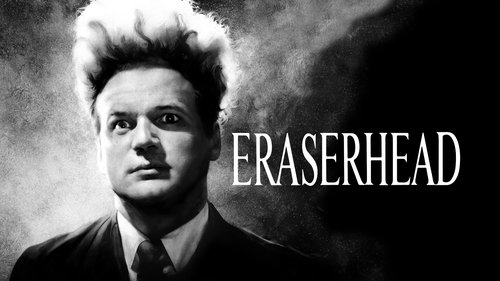





I believe movies should bring joy, or at least offer a sense of euphoria. Of course, getting there isn't always straightforward. I used to think that any hint of sexuality automatically qualified a film as something akin to pornography, and during my teenage years I primarily watched films with erotic themes—"A Clockwork Orange" being the first example that comes to mind. Looking back, I realize I was quite naive in those days. However, there came a point where I began to believe that encountering a movie could be transformative, and "Mulholland Drive" completely altered my perspective on film, prompting me to exclaim, “I’ve never seen anything like it.” To my surprise, I hadn't even been familiar with David Lynch at that time—a fact that embarrasses me now. From what I recall, between the ages of twelve and thirteen, I watched this bizarre, showbiz-centered film a dozen or more times, finding myself consistently captivated rather than bored. It’s remarkable how something like that can happen. It felt like “a monumental” movie in my life—my strongest experience in a movie theater was seeing "The Return of the King." So I felt compelled to see other films by this acclaimed director. In comparison, his film "Lost Highway" seemed rather insignificant. Honestly, I’m not sure how it was received initially, but that's often the case. It’s happened before: a friend recommends a movie as interesting, and then I watch it only to find it isn’t particularly engaging. Now I make it a point to “choose my own movies.” Even "Blue Velvet," which many consider Lynch’s best work, didn't impress me much. People often ask, "What is so appealing about David Lynch?" and I struggle to answer. In truth, even if he had only made one film—"Mulholland Drive"—David Lynch would still be considered the king of surrealist cinema. My own experience with his films, however, essentially stops there; “Eraserhead” started it all, and that’s where it should have ended. This unsettling, nightmarish film, which even patients experiencing psychosis might find overwhelming, was released in 1978. Although it didn't immediately become popular, it eventually gained a cult following through screenings at drive-in theaters and elsewhere. "What is this strange movie?" I wondered. I was surprised to learn that it was made in 1977. There wasn’t much of a plot, nor were the visuals particularly striking. It was simply a desolate, dusty industrial area. An odd character fixated on the main character's unusual hairstyle—played by Jack Nance—gives birth to a deformed child and is sexually abused by his stepmother. The story involves Mary, the “crazy fiancée” who gave birth to the deformed baby and abandoned him, her neighbors with questionable behavior, and puppies nursing from a female dog. A chicken at the table moves mechanically. We witness a "deformed" baby crying, and then we dissect it. We experience something akin to vomiting, and it’s unpleasant to watch. Frankly, I felt sickened. Was this my fault or the movie's? Or perhaps Jack Nance’s? It’s important not to assume that “Eraserhead” is overly complex; Christopher Nolan’s films seem esoteric to me, but Lynch’s aren’t so impenetrable if you are in a position to simply watch them. The images might be dull because they depict a world anyone could experience—like insanity or psychosis—and Lynch probably wouldn't want to make it inaccessible. "Eraserhead," at its core, is experimental science fiction (not breathtaking "entertainment") disguised as “surrealism.” The film opens with two shots of "Henry" and a "deformed child" floating through "outer space," and eventually a creepy woman appears in "high places" and "deep waters." The "factory zone" and "outer space" are connected until the creepy woman sings "In Heaven." The “Alien Child” is in an "intergalactic union" with the man from "The Distant Star" and Henry Spencer.
On September 22, 2026
#1888▲ 159
1888th by Pulse movie online52.2PULSEPulse MeterOur daily Pulse Meter measures public activity and popularity signals across the web.How it works →