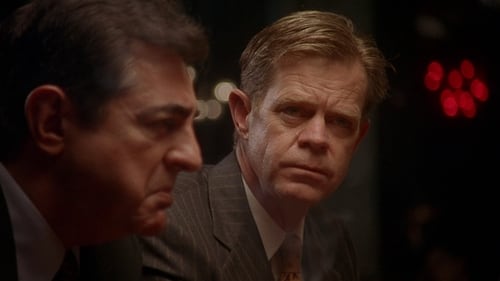





It's always a plus for a film to include both William H. Macy and Joe Mantegna, especially if David Mamet is involved. Mantegna has a brief appearance in Edmond, which is based on Mamet’s one-act play and directed by Stuart Gordon, but his role proves significant. Edmond Burke (Macy) meets Mantegna's character at a bar, and after they connect over their shared prejudices, the latter gives him a card with an address for a nightclub—a card that Edmond briefly perceives as a Tarot card: the Hierophant. The irony lies in the fact that the Hierophant is associated with bringing religious followers to what’s considered sacred; within The Rider-Waite Tarot Deck, it signifies adherence to societal norms and respect for established morals, representing guidance toward knowledge, understanding, and wisdom. Therefore, while appearing as the Apollonian Hierophant, Mantegna actually functions as a Dionysian force, subtly pushing Edmond towards immorality and transgression, and initiating a downward trajectory of hatred, ignorance, and criminal activity. The protagonist’s name also carries an ironic weight. Edmond is linked to Edmundi, which comes from Old English words meaning “prosperity” or “riches,” and "protector.” Throughout this pivotal night, we observe Edmond carelessly losing his money, essentially demonstrating the saying 'a fool and his money are soon parted.' He transforms from a protector into someone needing protection. Edmond is an utterly repugnant and reprehensible individual, solely focused on sex and money—specifically, how much of the latter he’s willing to spend for the former (Macy's performance stands out because he portrays Edmond as a loathsome person while still managing to hold our attention; his company is distasteful yet strangely captivating). The people who cross his path aren't portrayed in a favorable light either; they are no better than Edmond, just marginally less awful. For example, the African-American man that Edmond viciously assaults, accompanied by racist insults, attempted to rob Edmond while pretending to be a pimp. And when Edmond finally achieves sexual intimacy—ironically with the only woman he approaches who isn’t a prostitute—she proves to be as prejudiced as he is. He ultimately kills her because she refuses to acknowledge that she's essentially a waitress. Gordon and Mamet don't merely criticize white male dominance; they hold society responsible overall (though some more than others, and Edmond receives a punishment proportionate not only to his crimes but also to his racism and homophobia). It’s only when Edmond is cut off from that society—when he breaks any remaining connections to the outside world—that Mamet and Gordon condemn him, and he finds a measure of redemption, learning to appreciate those around him in both word and deed.
On September 23, 2026
#12589▲ 2996
12589th by Pulse movie online33.1PULSEPulse MeterOur daily Pulse Meter measures public activity and popularity signals across the web.How it works →