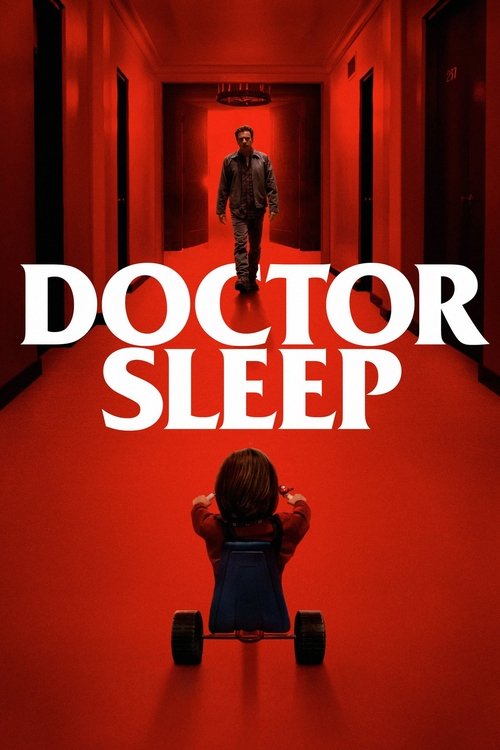





Doctor Sleep may not lull you into a peaceful state, but it does drain your spirit. Director Mike Flanagan faced an enormous challenge: adapting a Stephen King novel—a feat in itself given his detailed writing style—and creating a sequel to what many consider the greatest horror film ever made. He aimed to satisfy both devoted readers and movie fans. Even setting aside my own opinion of Doctor Sleep, some credit must be given just for attempting such a production. However, that doesn’t excuse specific filmmaking choices that detract from the film and contribute to the decline of other familiar properties. The story follows an alcoholic Dan Torrance, scarred by his experiences at the Overlook Hotel (‘The Shining’), whose fragile peace is disrupted when he encounters a young girl with similar abilities who is being hunted by creatures that steal “shine.” I haven't read the novel, though I have seen ‘The Shining’ many times. What makes that horror film so exceptional is Stanley Kubrick’s ability to take King’s story and create his own distinct version—a version the author still has mixed feelings about. So, for Flanagan to incorporate elements faithful to Doctor Sleep while maintaining the cinematic style meticulously crafted by Kubrick presented a significant hurdle. There's a clear reason that’s so difficult: the overtly supernatural aspects of the novel don’t align with the source of terror in Kubrick’s film. With regret, I must report that Doctor Sleep ultimately doesn’t work; it simply doesn’t succeed. The movie is an unwieldy production that relies on heavy-handed storytelling and nostalgia to connect its inspirations. While tonally different from ‘The Shining,’ there are some positives before addressing the disappointing third act. Doctor Sleep effectively portrays childhood trauma and how coping mechanisms become embedded in adulthood. Young Danny uses his imagination to create mental traps, containing the spirits of the Overlook. Yet, this ingenuity doesn’t prevent him from struggling with alcoholism, substance abuse, and a generally self-destructive lifestyle that masks rather than resolves his trauma. Thematically, this is powerful and provides narrative cohesion for the first two hours. You find yourself connecting with Danny because of the fears he has carried through both films. He embodies “the shining.” McGregor delivers a captivating performance, depicting fragility through physically demanding scenes while maintaining the entranced demeanor of his younger character. The initial hour, which extensively explains "the shining" and the intentions of the antagonists, The True Knot, suffered from inconsistent tones due to frequent location changes. One moment you're in a quiet town, another in a forest, then suddenly eight years have passed. Rapid editing and excessive exposition diminished any atmospheric tension; it was nonexistent, and Kubrick’s directing style felt like an imitation. Then the second hour began, which is among the strongest offerings this year. Flanagan maintained a surprisingly dark tone that shocked some audience members, forcing them to leave the theater. Abra's mental space—a precocious teenager with “shine”—produced a visually imaginative battle against Rose the Hat, leader of The True Knot. Ferguson’s portrayal of the antagonist was remarkable, comparable to Pennywise as one of the most memorable King villains ever depicted. Sinister, relentless, and bordering on madness, she controlled every scene with just her eyes, enhancing the palpable tension and essentially carrying the second act. In fact, she made the entire film worthwhile. The sudden bursts of gore and darkness in the middle act were astonishing, settling into a direction that I had hoped would guide the underwhelming first act. The third act then arrives, and the story collapses like the Overlook itself, plagued by an overwhelming reliance on nostalgia—something ‘The Shining’ also suffered from. Remember Jack's violent chopping of the bedroom door? The blood cascading down the hallways in slow motion? Room 237? Kubrick’s introductory camera movement as the Torrance family drove to the hotel? The typewriter? Walking up the stairs in a confrontational manner? The snow-covered hedge maze? The twins? No? Flanagan has you covered. Nostalgia is a powerful tool, but it must be handled with care. The distinction between imitation and homage is subtle, and unfortunately, Flanagan opted for the former. So much of ‘The Shining’ is replicated in the third act, scene by scene, that it felt like an almost identical copy without the original story's substance. Re-casting actors from the first film, despite Essoe outperforming Duvall—though not a difficult task—felt unnecessary and even tarnished ‘The Shining.’ Danny walking through dilapidated hallways for ten minutes while Flanagan incorporates familiar sequences served no purpose other than to remind you that this is a sequel; it doesn’t advance his character or the plot. Rose the Hat staring at blood-spewing elevators? Pointless. Danny staring at an axe encased in glass? A respectful nod to its predecessor. Do you see the difference between imitation and homage? The third act was filled with false copies, exploiting fans' nostalgia; it is uninspired and mundane—it made me feel like a dull boy. Creatively, Doctor Sleep managed to incorporate the best elements of both its source material and preceding film, but employed flawed techniques when developing the plot. It’s psychologically stimulating without generating dread, extrasensory without testing the senses, and modestly shining among King's supernatural adaptations.
On October 1, 2026
#1615▲ 155
1615th by Pulse movie online6.8PULSEPulse MeterOur daily Pulse Meter measures public activity and popularity signals across the web.How it works →