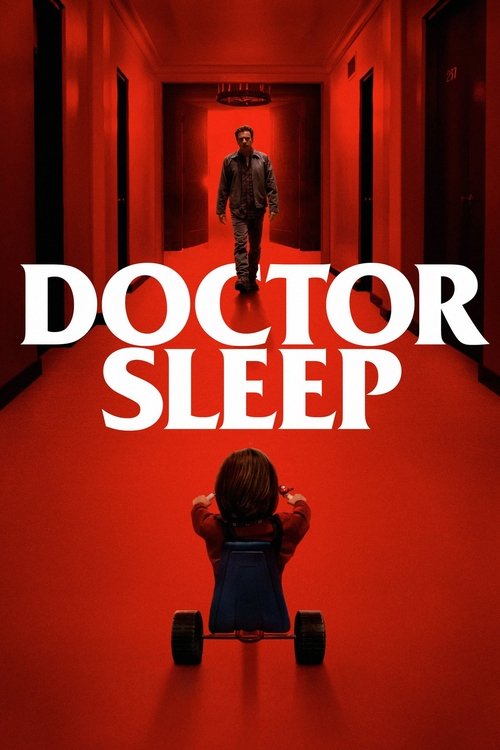



Many people believe "scary movies" involve jump scares and loud noises, but I disagree. Those films are quickly forgotten. The truly unsettling ones linger—those with disturbing stories rooted in relatable themes. This isn't meant as an introduction, just a note to temper expectations; *Doctor Sleep* isn’t a mainstream horror film. As many of you know, I’m a big admirer of Stanley Kubrick’s adaptation of Stephen King’s *The Shining*. It's a landmark horror movie that has influenced filmmaking for generations. Mike Flanagan faced an enormous challenge in creating a sequel while honoring both the novel and Kubrick’s vision. (Spoiler warning for *The Shining* since it came out decades ago, but this review remains spoiler-free for *Doctor Sleep*.) A key difference between King's book and Kubrick's film is the ending: In the novel, Jack Torrance causes an explosion that destroys the hotel; in the movie, he freezes to death while his son escapes. Flanagan manages to bridge these differences, respecting King’s intentions while still expanding on the story. It's a sequel, so additions are expected—nothing is altered or undone—and it's best to be open to new ideas if they make sense. Flanagan skillfully recreates iconic moments from *The Shining* and adds his own touches. With cinematographer Michael Fimognari, he generates intense tension reminiscent of the original film. The sequences exploring characters’ minds are particularly well-executed and memorable. However, the pacing feels different in each film. Both films run over 140 minutes and deliberately use slow pacing. Yet, *The Shining* seems to fly by faster than *Doctor Sleep*. This isn't due to runtime alone; Kubrick’s movie relies on extended takes and dialogue, while Flanagan uses a more modern style with frequent cuts and more action. Audiences might perceive the sequel as boring without realizing why—it's not simply about speed, but how time is conveyed onscreen. People will likely blame the story, but *Doctor Sleep* offers far more entertainment than *The Shining*, which largely consists of two hours spent in a hotel where dialogue drives the action (with things escalating significantly only in the final 15-20 minutes). The sequel has additional subplots and characters, so it should feel faster paced—which it doesn't. This film is proof that extended scenes and long takes are an effective way to manage runtime without it feeling sluggish, especially in a psychological horror movie. I’m not criticizing the film’s length or pace; I simply want to explain why it might feel slower than expected while defending its well-crafted screenplay. Like *The Shining*, exposition is handled with subtlety, and the performances of Ewan McGregor and Kyliegh Curran are captivating. McGregor is perfectly cast as Danny Torrance, portraying his character with nuance. His journey through adulthood is particularly compelling—a realistic and logical depiction of a man grappling with past trauma. He isn't alone; Abra is a young girl determined to protect others using her abilities, and actress Kyliegh Curran delivers an impressive debut performance, displaying remarkable emotional range. She shines in several scenes, especially those involving Rose the Hat, but this highlights a significant issue: Rebecca Ferguson’s character and The True Knot group are the film's only major weakness. When crafting villains, there are two approaches: create a complex figure with whom audiences can empathize or establish an intimidating force to fear. Flanagan chose the latter, which unfortunately falls short. I don't know if King restricted changes to Rose or The True Knot, but they don’t quite work onscreen. Their history is unexplored, and their motivations are shallow, making it difficult to connect with any of them. Even if they were truly menacing, this wouldn't be a problem; however, they aren’t. Despite the constant reminders of danger and Rose’s supposed strength, the interactions with Abra don’t convey that sense of threat. A considerable amount of screen time is dedicated to The True Knot, but their development feels incomplete. They are not bad villains—they're more fleshed out than many horror movie antagonists—but something is missing. Fortunately, this is the only major flaw in an otherwise consistently strong film. Fans of *The Shining* will appreciate the numerous references and Easter eggs (which appear after we’ve become invested in the story, demonstrating Flanagan’s skill). The score, adapted by The Newton Brothers, and Kubrick's signature cinematography are also exceptional. Ultimately, *Doctor Sleep* may be the first sequel to a beloved horror classic that doesn’t diminish the original or disgracefully copy it—it stands on its own as a great film with a compelling narrative, strong leads, and appropriate nods to the original. Flanagan successfully balanced King's novel and Kubrick's adaptation, despite the challenges. Aside from the pacing not working quite as well and The True Knot group’s shortcomings, the screenplay is excellent. The cast—especially Kyliegh Curran’s remarkable debut—elevates every scene, leading to a nostalgic ending that will likely divide fans. I am among those who enjoyed it; I genuinely appreciate this movie! If you're a fan of *The Shining*, don’t miss it. Rating: A-
On September 29, 2026
#453▼ 16
453rd by Pulse movie online18.0PULSEPulse MeterOur daily Pulse Meter measures public activity and popularity signals across the web.How it works →