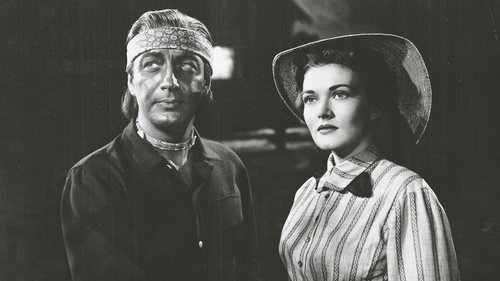




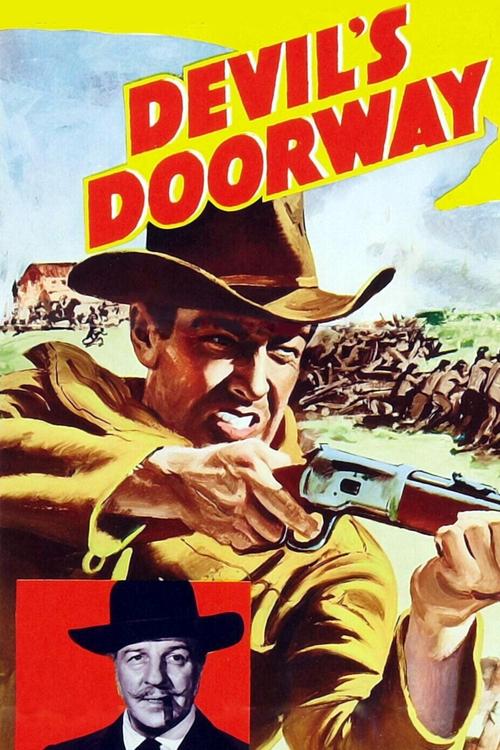
According to the law, an Indian has no more rights than a dog. Devil’s Doorway was directed by Anthony Mann and features Robert Taylor as Lance Poole, a Shoshone Indian returning home to Medicine-Bow after three years serving in the American Civil War and participating in three major conflicts. Having been awarded the Congressional Medal of Honor, he anticipates a peaceful retirement on his family's land. However, bigotry and greed quickly destroy those hopes when new laws are introduced to strip Native Americans of their land rights. Devil’s Doorway is a Civil Rights Western that, notably for its time, examines the injustices inflicted upon Native Americans. It has a somber tone, which isn’t surprising given Anthony Mann's involvement; he would later become known for his series of "Adult Westerns" with James Stewart. Before this, Mann demonstrated an ability to handle difficult subjects and dark themes through several well-regarded film noir movies. This project was perfectly suited to his talents, as his work frequently portrays minority groups sympathetically. MGM initially hesitated about the film’s direction and withheld its release in 1949. Following the success of Delmer Daves' similarly themed Broken Arrow the next year, they released it, but the film was largely overshadowed by the acclaim for Stewart’s movie. It’s unfortunate because this film is on par with Mann’s best efforts. Filmed in black and white, the film showcases beautiful landscapes that contrast sharply with the bleakness of the story's trajectory. Shot on location in Aspen and Grand Junction, Colorado (with cinematography by John Alton), the film manages to transcend some obvious casting concerns. Robert Taylor has often faced criticism—and I’ve been among those critics—but here, cast against type as a Shoshone Indian, he brings conviction and stoic nobility to the role that truly works. Some of his scenes with Paula Raymond, who plays his lawyer Orrie Masters, are remarkable for how much emotion is conveyed through restraint. You might notice changes in his skin tone throughout the film, but if you focus on his eyes, you’ll feel the conflict and loyalty, and it won't matter. The screenplay was written by Guy Trosper (Birdman of Alcatraz), and it doesn’t shy away from showing how poorly Native Americans were treated. Combined with Alton’s skill in capturing desolate landscapes, the film has a distinct noir atmosphere—something unique for a Western and indicative of a shift in Hollywood filmmaking. The genre now includes substance to match its action and visuals. That's not to say this movie lacks excitement; Mann delivers thrilling action sequences that are purely adrenaline-fueled. It’s an excellent and important film, one deserving far more attention. It still awaits a widespread home video release. I quote Orrie Masters from the film: "It would be too bad if we ever forget,"—a sentiment applicable to both the movie's theme and the film itself. 9/10
On September 22, 2026
#64497▲ 3248
64497th by Pulse movie online8.0PULSEPulse MeterOur daily Pulse Meter measures public activity and popularity signals across the web.How it works →