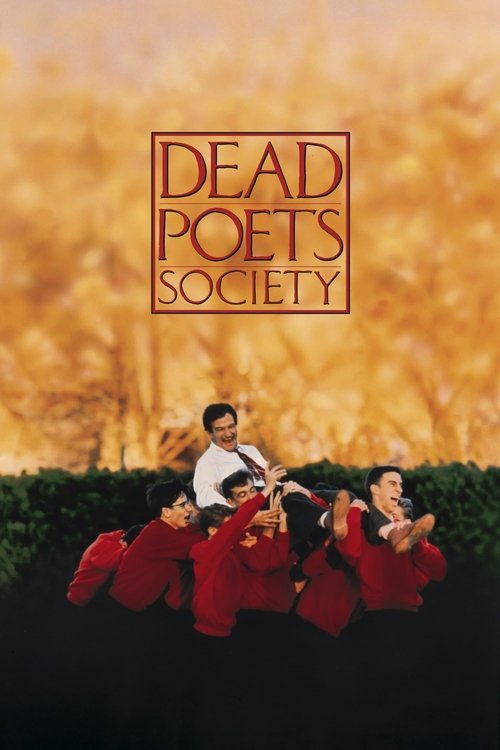




At an elite preparatory school in 1959, a new teacher named John Keating, portrayed by Robin Williams, motivates his students to embrace their potential and find passion in life—a sentiment underscored by the understanding that they have limited time. Following Keating's unconventional guidance, each boy begins acting on these ideas, leading to both positive and negative outcomes. Released in 1989 under the direction of Peter Weir, "Dead Poets Society" stands out as a profoundly inspiring coming-of-age drama, easily ranking among my favorite films ever. The movie immediately draws you in and maintains that grip until its conclusion; it’s a clear sign of a truly exceptional film, regardless of subject matter. The visuals and locations are superb, filmed in the Middletown region of Delaware, although the story is set in Vermont. The autumnal and winter scenes are particularly striking. A pivotal moment arrives near the end when the students offer Keating a memorable farewell gesture. Film critic Roger Ebert famously described this scene as so emotionally intense that he felt like he wanted to vomit, but I disagree; it’s both surprising and deeply affecting. The film offers layers of meaning for repeated viewings, extending beyond just the poetry and prose itself. For example, "the letter kills," a reference to Neil's father and many of the school's instructors who prioritize rules over happiness; Cameron embodies betrayal; Keating serves as a scapegoat; Chris’s appearance at the school entrance reveals the beauty of femininity; nature inspires spirituality; and Keating's sadness after Neil is removed from the theater crowd highlights his inability to prevent an injustice. There are a few minor scenes that don't quite work, but this is common even in excellent films. One potential criticism revolves around the tragic fate of one student seeming to contradict the film’s message of seizing the day. However, I believe he truly embraced that idea; his aspirations were stifled by someone who didn’t share Keating’s perspective, and he couldn't cope with it. Dynamic ideas inevitably lead to consequences, both good and bad. The varying outcomes experienced by the other boys—some achieving their goals while others faced trouble for disregarding advice—add a sense of realism to the story. Another reviewer suggested that the nighttime poetry readings in a cave were “homo erotic.” This interpretation seems rooted in modern sensibilities rather than an understanding of the time period. These teenage boys, constrained by strict rules at a New England prep school in 1959, found this was their only outlet for enjoyment. I recall similar experiences as a teenager—hanging out with friends, discussing music lyrics (which could be considered a form of poetry), and occasionally bringing girls along. The film also depicts instances where boys bring female students to the cave or share nude photographs, which effectively refutes any claims of homoeroticism. Those who dismiss this movie often return to unfulfilling jobs with no sense of purpose. I would encourage them to rewatch it. Be warned: there are no explosions, computer-generated effects, constant action sequences, excessive profanity, nudity, or explicit sex scenes—a shocking notion for some, but a reality. Then consider your own life and ask yourself: Are you willing to change? To cast aside caution and pursue what truly matters? Will you “seize the day”? The answer will likely determine whether this film resonates with you. While Australian director Peter Weir has created other noteworthy films like "Witness" and "Picnic at Hanging Rock," which can be dull if you're not in the mood for a slow-paced mystery about an all-girls school, “Dead Poets Society” is his masterpiece. I urge everyone to watch it, or give it another chance if you haven’t already. It's an exceptional story that has the power to inspire, especially if you feel trapped in a monotonous and unfulfilling routine. The film runs for just over two hours (128 minutes). GRADE: A+
On October 3, 2026
#694▼ 142
694th by Pulse movie online9.6PULSEPulse MeterOur daily Pulse Meter measures public activity and popularity signals across the web.How it works →