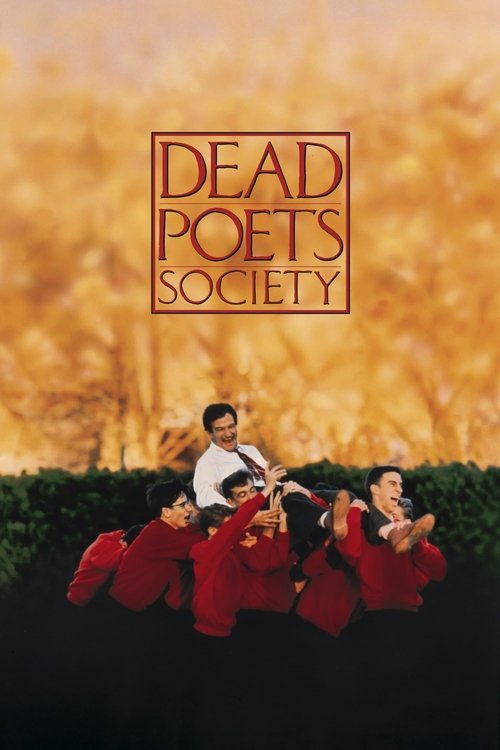




Peter Weir directs Dead Poets Society, a film featuring Robin Williams, Robert Sean Leonard, Ethan Hawke, Kurtwood Smith, Gale Hansen, and Norman Lloyd. The screenplay by Tom Schulman draws from his experiences at Montgomery Bell Academy, an all-boys school in Nashville, Tennessee. Set in 1959 at the fictional Welton Academy in Vermont (filmed on location at St. Andrew's School in Middletown, Delaware), the story centers on English teacher John Keating, who employs unconventional methods to inspire his students and encourage them to reach their full potential while cautioning against conformity’s dangers. Dead Poets Society was a significant commercial success, earning nearly $220 million worldwide—a considerable achievement considering it competed with popular films like Batman, Lethal Weapon 2, and Indiana Jones and the Last Crusade. It demonstrated that audiences were receptive to serious drama when presented effectively. And indeed, Dead Poets Society succeeds admirably. The foundation of its strength is Schulman's Academy Award-winning script, which examines educational conformity and the pressures from parents and peers. Robin Williams’ casting as the inspiring teacher is a key element; he encourages his students to think differently. These young men, whose futures seem predetermined, are challenged by Mr. Keating to embrace spontaneity, pursue their ideals, and view life with fresh perspectives. Following a Best Actor nomination for Good Morning Vietnam, Williams definitively proves his ability as a dramatic performer. His portrayal of Keating is charismatic but avoids the comedic antics he’s often known for. He maintains remarkable control; Keating doesn't immediately become the catalyst he is destined to be. Instead, he serves as a consistently supportive presence—a father figure and confidant. The script's avoidance of typical teacher-student relationship tropes allows Williams to bring depth and intelligence to his role. Even moments of humor, such as Brando performing Shakespeare, are handled with warmth and contribute to the developing relationships within the film. While it’s undeniably Williams’ film—the movie truly shines when he is on screen—the young cast portraying the students deserves high praise for their sensitive performances. Robert Sean Leonard delivers a heartfelt performance, Ethan Hawke creates a haunting portrayal, and Gale Hansen brings an energetic quality to his role. Kurtwood Smith also leaves a lasting impression as a stern father figure. Under Weir’s direction, the film, unsurprisingly to his fans, possesses a mystical atmosphere. Working with cinematographer John Seale, Weir skillfully captures the essence of the time, place, and people in his films while imbuing them with touches of beauty. Whether it's the boys walking across the school grounds surrounded by autumn colors or trudging through snowy landscapes as winter arrives, Weir lends an appropriate poetic quality to the scenes. It’s also noteworthy that these scenes, along with the cave sequences where the Dead Poets Society meetings take place, reflect the characters' emotional states: vibrant and optimistic amidst the greenery, nervous and excited in the darkened cave, then burdened and weary as the fall mirrors the emotionally turbulent final act. This last section has become somewhat controversial; some viewers find it overly sentimental, while others—like myself—find it uplifting, hopeful, and a fitting conclusion to the emotional journey taken by the cast and crew. Do you tend to see things positively or negatively? It’s an excellent and thoughtful story, well-directed and acted, with themes that make it surprisingly one of the best Punk Rock movies available. 9/10
On October 3, 2026
#694▼ 142
694th by Pulse movie online9.6PULSEPulse MeterOur daily Pulse Meter measures public activity and popularity signals across the web.How it works →