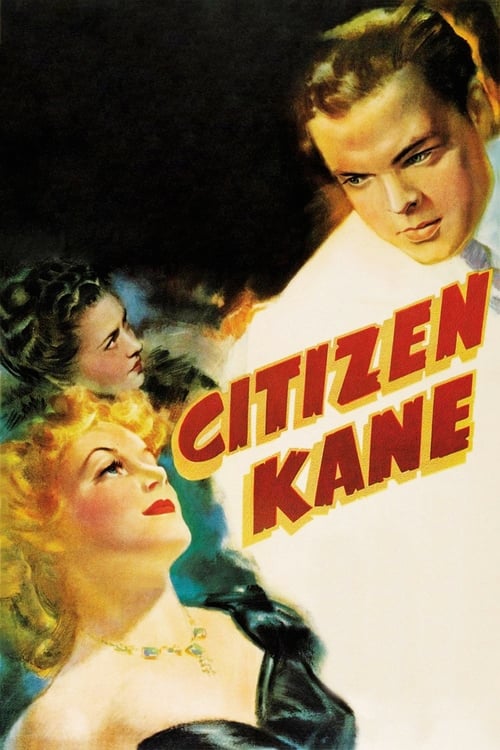




Many consider this to be the greatest film ever made. Recently, I’ve been exploring David Fincher’s work in preparation for his upcoming project, *Mank*, which examines the story behind the screenplay credit controversy surrounding *Citizen Kane* from 1941. Herman J. Mankiewicz certainly contributed to Orson Welles' script, but whether that contribution warranted a shared credit is a complex issue—one apparently settled by acknowledging Mankiewicz’s deserved recognition in the writing credits. This review isn't about that external discussion, however; it concerns cinema's most acclaimed film. I always maintain that any individual's opinion of a movie holds as much weight as another's, provided the arguments aren’t disrespectful or dismissive—like simply calling something "boring" or disliking an actor and letting that dictate your view. I often encounter people wondering if they *should* watch this classic film everyone talks about, hesitant because it’s old-fashioned, black-and-white, or visually dated. This is a common reaction in the world of film. My response is to ask why someone who loves movies would avoid such a highly regarded work regardless of its age? People hesitate, worried that disagreeing with popular opinion might make them feel out of step. There’s still a tendency for people to conform and shy away from unpopular viewpoints, either by attacking those who differ or inventing explanations to justify their position. If you appreciate filmmaking, going to the movies enhances that passion. However, viewers have a responsibility to understand the context in which a film was made. We can't judge a 1941 movie through the lens of 2020’s cultural norms, technology, social rules, or mindset; doing so would be unfair and skew our enjoyment. Otherwise, we might watch *Citizen Kane* and falsely conclude that it lacks innovation. I recommend researching a film's impact on filmmaking and culture before or after watching an older movie. Understand what makes it special, what to look for, and adjust your perspective to the year of its release. Try to imagine yourself as someone living then, going to see a new motion picture in a theater. If you can do that, you’ll likely recognize *Citizen Kane*'s unprecedented and groundbreaking influence on cinema. Film critics are often unfairly labeled as lacking enjoyment or only valuing pretentious art. While I won't debate this, it's important to remember that "artsy" elements are essential to filmmaking; without them, we wouldn't have the visually stunning films we enjoy today. *Citizen Kane* revolutionized every aspect of cinema and shaped the industry. Directors now struggle to realize their visions when studios once controlled the final cut—something Orson Welles helped change. He transformed marketing (the first trailer didn’t show any actual footage) and storytelling structure, establishing groundbreaking technical innovations that permanently altered filmmaking. At the time, ceilings weren't shown, hand-held cameras were uncommon, lighting had strict rules, and unusual camera angles were rare. Cinematographer Gregg Toland changed all of that, profoundly influencing modern film production. His experimental techniques led to the imaginative use of "deep focus," showing foreground, background, and everything in between with sharp clarity. Toland was so vital to *Citizen Kane*'s success that Welles shared credit with him. VFX supervisor Vernon L. Walker pioneered impressive techniques, which even today’s Corridor Crew VFX team struggled to understand when breaking down a particular sequence. He excelled at shooting large crowds and expansive interior spaces. Robert Wise's editing created the famous breakfast montage by seamlessly cutting between shots while actors changed clothes and makeup, conveying the passage of time within a single setting. Innovation is the key word in every technical aspect. Bailey Fesler and James G. Stewart used radio techniques to simulate crowd noise and singing. Bernard Herrmann composed an unconventional score with pauses and short musical fragments—a stark contrast to Hollywood’s usual constant soundtrack. Finally, Mankiewicz and Welles' screenplay was unique for its structure based on flashbacks and a nonlinear timeline, which likely contributes to the film feeling less dated than many others. *Citizen Kane* was decades ahead of its time, both technically and in terms of storytelling. And its ending remains as powerful and surprising as it was upon my first viewing. It’s become the most influential movie in cinema history, consistently topping “best films” lists and remaining the number one choice for many critics. *Citizen Kane* has generated an immense amount of discussion, to the point where some people are afraid to even admit they found it unremarkable. It's understandable that viewers might not connect with all the qualities everyone praises. While its groundbreaking innovations are undeniable, it’s still a film from 1941. If released today, most would likely consider it a well-directed, technically impressive film with a compelling character study. However, it doesn't need to resonate with everyone; no movie ever will. I don't ask you to love *Citizen Kane*, but rather to understand its legacy and impact on filmmaking and culture. Nearly every film we see in massive IMAX theaters today owes something to Orson Welles and his visionary production. Eighty years later, *Citizen Kane* is still considered by many to be "the greatest movie ever made." It has been the subject of countless essays and discussions; everything that could be said about it seems to have already been written. No film deserves higher expectations from viewers, but this hype can make it intimidating. Are some people bored? Do some actors seem flat
On September 25, 2026
#334▼ 77
334th by Pulse movie online54.4PULSEPulse MeterOur daily Pulse Meter measures public activity and popularity signals across the web.How it works →