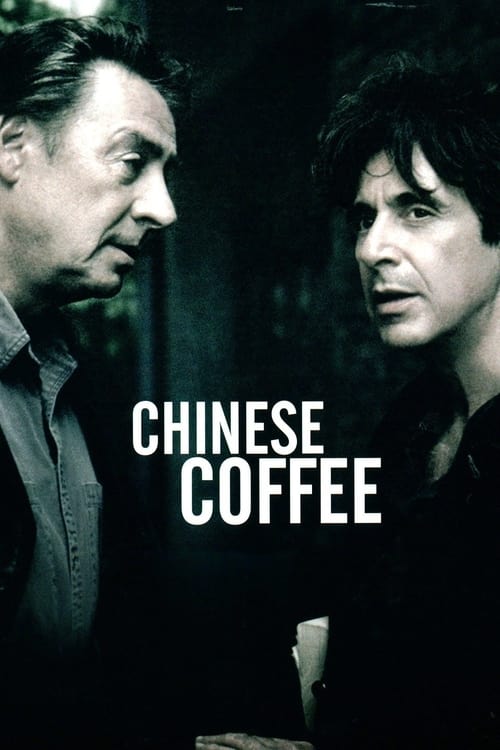




In Carlito's Way, Al Pacino offered a cautionary statement about how a debt can be more dangerous than violence. Chinese Coffee (2000) demonstrates precisely what he was referring to. Harry Levine (Pacino) and Jake Manheim (Jerry Orbach), whose relationship suggests that unhappiness is contagious, are indebted to each other; Harry provided Jake with $500 for photographic equipment, while Jake promised to review Harry's writing. Jake, however, lacks the funds to repay Harry, who’s struggling financially (both men are artists facing poverty at a point in their lives where such a lifestyle has transformed from a choice into “nothing but a long history of failure”), and insists he never read Harry's manuscript. In fact, he’s stored the pages in the freezer, like unprocessed meat – there is something within them that he finds difficult to accept, let alone understand, as doing so would be akin to cannibalism. The theme of an artist using the experiences of someone they know for inspiration is familiar; recently we've seen it explored, with mixed results, in Steven Soderbergh’s Let Them All Talk and Sam Levinson’s Malcolm & Marie. This kind of story, which essentially involves a battle of words, benefits from a simple setting and few performers – that’s why Malcolm & Marie worked better than Let Them All Talk; the former felt like it belonged on stage, even though it was written as an original screenplay by Levinson. Chinese Coffee, adapted by Ira Lewis from his one-act play of the same name, is even more stripped down, largely unfolding in a dwelling described as “stifling”, “thick” and “dense,” with windows that have been secured. Pacino – who was in the initial stage production and directed the film version – and Lewis are intimately familiar with the material, producing something economical and focused. At the same time, they skillfully use the opportunities available through filmmaking to ease the feeling of confinement from the primary location, occasionally venturing out to visit more spacious areas, often in flashbacks—a contrast to the play, where everything occurs within a small apartment in Greenwich Village. Sometimes, though, the film simply exchanges one cramped space for another; specifically, the basement Harry shared with his former partner Joanna (Susa Floyd).
On September 26, 2026
#31594
31594th by Pulse movie online14.4PULSEPulse MeterOur daily Pulse Meter measures public activity and popularity signals across the web.How it works →