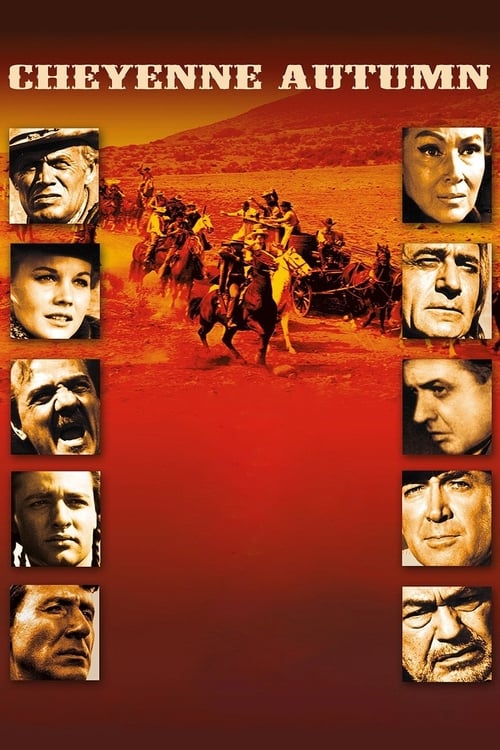




A Cheyenne is a soldier from the very beginning. Cheyenne Autumn, directed by John Ford, offers a “Hollywood” version of the Northern Cheyenne Exodus of 1877-1879. The story follows the Northern Cheyenne people, dissatisfied with their food and living conditions, as they attempted to return to their former lands in the north after being relocated to a reservation in the south by the United States Army. It features Richard Widmark, Caroll Baker, Dolores del Rio, Karl Malden, Gilbert Roland, Ricardo Montalban, Edward G. Robinson, James Stewart, and Arthur Kennedy. The film’s score is composed by Alex North, with cinematography by William H. Clothier, filmed in Super Panavision 70 across various Utah locations, primarily Monument Valley. Does it really matter who initiated the conflict? John “Pappy” Ford's second-to-last film and final Western feels expansive in its scope and production, considered an earnest effort to correct years of inaccurate portrayals of Native Americans in Hollywood—though whether that was his intention specifically isn’t something he publicly stated. The movie tackles important themes and shows empathy for the Cheyenne people’s situation; you naturally find yourself wanting them to succeed. However, it consistently feels like a film viewed through the lens of a white man, leaving you desiring more from the Cheyenne perspective, for their voices to be central to the narrative. It would have been beneficial to learn about some of the key figures involved in this challenging and tragic journey back to Wyoming. The inclusion of a seemingly unnecessary comedic interlude at Dodge City is also frustrating, serving as an apparent opportunity for James Stewart and Arthur Kennedy to portray Wyatt Earp & Doc Holliday, respectively—though they don’t quite succeed. As many critics have observed over the years, Cheyenne Autumn ultimately comes across as an admirable failure from a director of John Ford's stature. The cast, excluding the performers in the Dodge City sequence, are generally adequate. Widmark is compelling as the hesitant captain responsible for returning the Cheyenne to their desolate reservation. Baker delivers a convincing portrayal of a sensual Quaker woman, Robinson adds some refinement later on, and Montalban & Roland excel as Cheyenne chiefs Little Wolf & Dull Knife. Yet, they’re overshadowed by Clothier's impressive photography; breathtaking landscapes dominate the screen with vibrant colors, showcasing Monument Valley as an iconic natural presence observing the Cheyenne striving to reclaim their home. It is undeniably a John Ford film, demonstrating some inventive filming approaches, but the core of the story gets lost due to its excessive length, a silly sequence in the middle, and much unnecessary material. It receives a 6/10.
On September 29, 2026
#4828▲ 654
4828th by Pulse movie online7.7PULSEPulse MeterOur daily Pulse Meter measures public activity and popularity signals across the web.How it works →