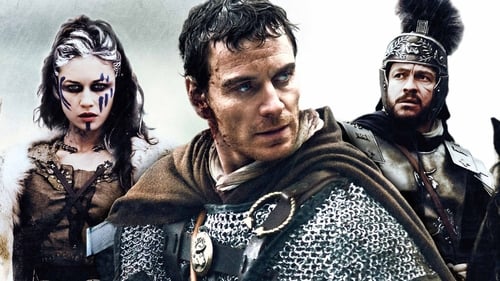





Wikipedia notes that Centurion “received mixed reviews and performed poorly at the box office,” though I’m not sure how many viewers noticed its underlying fascist themes. The film unfolds in Britain during the Roman invasion of 43 AD. Generally speaking, unless it's propaganda or a deliberate distortion of history, an invasion should portray the invaders as antagonists and those who are invaded as protagonists—setting aside any political considerations; I’m simply referring to basic storytelling principles here. However, Centurion seems to want us to sympathize with the invading forces, a connection that it subtly but intentionally fosters by having the Romans speak in what sounds like standard British English, while the native Picts – essentially, ‘the others’ – communicate in Gaelic, a Scottish language that even many Scots aren't familiar with. In contemporary terms, this movie is asking us to do something akin to cheering for Nazis or, conversely, criticizing Ukrainians. Granted, the central character is just a soldier and, as Tennyson observed in “The Charge of the Light Brigade,” a soldier’s duty is "not to reason why … but to do and die"—but that's precisely where the problem lies. Quintus Dias (Michael Fassbender), along with writer/director Neil Marshall, don’t question warfare itself; what they seem concerned with is “war without honor.” Consequently, we are expected to form a moral judgment based solely on whether one side fights ‘fairly,’ regardless of their motivations. Therefore, the Picts, who are defending their homeland and freedom, are criticized for “refusing to engage in direct confrontation. Instead, they harass us relentlessly until we suffer losses, hiding like animals, striking swiftly then retreating into darkness.” It’s disregarded that the Romans initiated hostilities. Meanwhile, the primary adversary is a woman whose "village [was] destroyed as punishment for resisting Roman control … her father's eyes were burned out …. her mother was raped repeatedly until she begged to die … before she too was violated … and finally, her tongue was cut out so she couldn’t speak against the brutal Roman Empire.” That would seem to be your typical underdog hero—but somehow we are meant to support him when compared to this woman. Furthermore, we're expected to accept Quintus’s romantic interest, a woman called Arianne who assists the Romans due to spite because she has been rejected by her fellow Britons (I believe the term for such an individual is ‘collaborator’). Quintus ultimately abandons the Roman Empire—but only because they attempt to kill him, for reasons that aren't important—to join Arianne as an outcast. Did Marshall assume that with enough time, people might view history like mythology—without needing to distinguish between right and wrong? After all, you can comfortably choose sides between the Greeks and Trojans in the Iliad and maintain a clear conscience, but I’m apprehensive about a future where a film like Saving Gefreiter Reichmann could become a major hit.
On September 22, 2026
#6444▲ 1287
6444th by Pulse movie online43.4PULSEPulse MeterOur daily Pulse Meter measures public activity and popularity signals across the web.How it works →