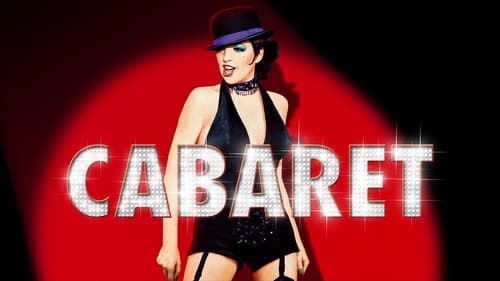




It’s difficult to understand how this movie could have been so dominant at the 1972 Oscars. That night felt like a competition where it swept the awards, taking eight: Best Original Soundtrack, Best Art Direction, Best Sound, Best Editing, Best Cinematography, Best Director, Best Actress (for Liza Minelli), and Best Supporting Actor, going head-to-head with “The Godfather,” Coppola’s most important film. I know a lot of people criticize the Oscars, and I agree with some of those points, but it remains an award to be respected as long as it's considered the most prestigious in cinema. And let’s be honest: eight awards is quite a few. But after watching it, I started to wonder if, despite its strengths, it benefited from considerable luck. The film allows Liza Minelli to truly shine, even though she hadn't previously established herself as a major actress; before this, she had only appeared in two films, and neither made much of an impression. With little effort required, and with everything working in her favor, she displays commitment, charisma, and presence, completely commanding the screen. She deserves recognition for her work, which elevates the film. Joel Grey also delivers a strong performance as the cabaret presenter. The rest of the cast is less impressive; some actors, like Marisa Berenson and Michael York, are particularly distracting. Set in 1930s Berlin, the production design and costumes effectively capture the atmosphere of the time, conveying a sense of moral decay and the desire to escape reality that existed within certain segments of society. The cabaret itself is portrayed as an unreal refuge where reality doesn't exist. Because of this, the film struggles to illustrate how Nazism gained popularity. As a musical, it’s unlike anything I’ve experienced before. In a movie like “Mary Poppins,” for example, the music enhances the action and the story flows naturally even when characters sing and dance instead of simply talking. Here, the songs interrupt the narrative and sometimes do so awkwardly, feeling more like intermissions. To worsen matters, the musical numbers are unmemorable, unpleasant, and don’t linger in your mind. The film contains nudity and explores sensitive topics such as sex, abortion, homosexuality, and prejudice, making it unsuitable for very young viewers. For me, the biggest issue with this movie is the story itself—there isn't a single character that evokes any feeling of connection or sympathy. Sally, portrayed by Minelli, comes across as irresponsible, self-absorbed, pointless, and generally harmful, and the narrative feels ugly, indulgent, excessively strange, and disjointed, like a surreal collage. Perhaps this explains why, despite all the awards it received and its merits, the film has largely been forgotten, unknown to most people who didn't see it when it was released. It demonstrates that qualities alone don’t guarantee cinematic immortality or lasting significance.
On September 24, 2026
#3898▲ 725
3898th by Pulse movie online48.2PULSEPulse MeterOur daily Pulse Meter measures public activity and popularity signals across the web.How it works →