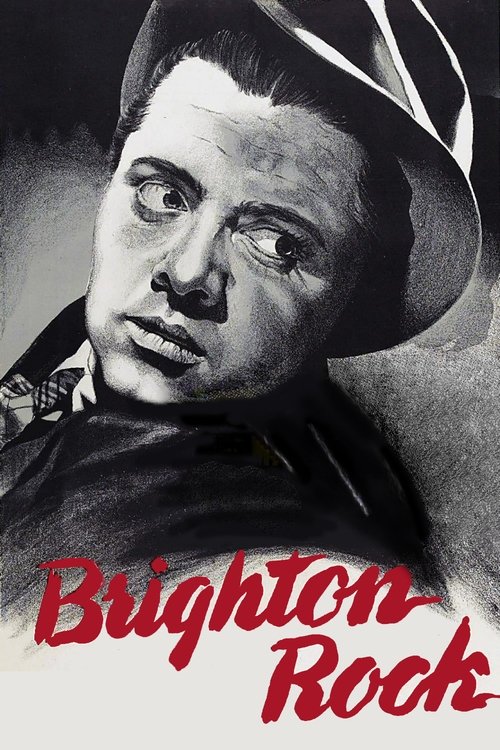




It's certainly true, these atheists don’t know everything. Brighton Rock was directed by John Boulting and written by Graham Greene (also a 1938 novel) and Terence Rattigan. Roy Boulting produced it, with Richard Attenborough, Carol Marsh, William Hartnell, Hermione Baddeley, Harcourt Williams, and Wylie Watson in the cast. Hans May scored the music, and Harry Waxman handled the cinematography. The story follows Attenborough as Pinkie Brown, a small-time Brighton hoodlum whose attempts to cover up a murder lead to escalating consequences for himself and those around him. 1947 proved to be an excellent year for tough, gritty British drama; in fact, it marked a significant point in the development of British cinema. It was the year that brought us They Made Me A Fugitive, It Always Rains On Sunday, Odd Man Out, and Brighton Rock. While the latter film may appear dated now, it initially caused considerable shockwaves. It’s refreshing to find that despite some minor technical limitations inherent in its age, it still possesses a power and bleakness that justifies its classic status. Part seedy seaside noir, part character-driven exploration of Catholic guilt and torment, Brighton Rock overcomes those slight old-fashioned technical imperfections through thematic strength and a tense narrative. Frequently, an author’s work loses momentum when adapted for the screen; Graham Greene is one writer who has managed to avoid that pitfall. The key challenge for adapters of his stories lies in understanding the characters involved, and thankfully, the Boulting brothers recognized that Pinkie Brown—undoubtedly one of Greene's greatest creations—has a complexity requiring him to be central to the unfolding events. The plot then develops around him as the seedy underbelly of everyday life in Brighton is revealed. Casting Attenborough as Pinkie was inspired; with his fresh face and wide eyes, he portrays the character as a tightly wound spring, his psychosis unsettling and seemingly ready to erupt at any moment. His cold-hearted relationship with Rose (Marsh), who is homely and desperately seeking affection, is deeply disturbing—and it’s that connection which drives the story forward. The narrative unfolds in two contrasting sides of Brighton: one bright and cheerful, filled with lights, funfairs, and candy floss; the other characterized by grimy boarding houses, penny arcades, and noisy backstreet pubs. The cleverness of the Boulting brothers' approach is that we understand the sunny side to be a mere facade concealing darker forces—much of the unpleasantness occurs against a backdrop of seaside amusement and relaxation. The iconic pier serves as a silent observer to both the good and bad sides of Brighton’s inhabitants. With Waxman’s somber photography, J Boulting paints in claustrophobic strokes, perfectly enclosing the main characters within restrictive settings that mirror their moods. It's destined for a negative outcome; the atmosphere makes that clear, but the filmmakers are enjoying tightening the noose one turn at a time—a definite bonus for fans of film noir. The movie boasts excellent casting across the board, with Hartnell particularly memorable as Pinkie’s gang member, Dallow, while Baddeley is suitably irritating as Pinkie's bold and brassy adversary, Ida Arnold. Each character is memorable, contributing to Attenborough's malevolent presence. It’s also rewarding to take away a number of striking scenes from the movie—from the heart-pounding chase at the beginning to the strange and haunting brutality of a ghost train sequence, and culminating in a cynical finale. The ending may have been softened compared to the novel, but what remains still has an impact, as does the film overall. 9/10
On September 29, 2026
#26158▲ 1871
26158th by Pulse movie online1.7PULSEPulse MeterOur daily Pulse Meter measures public activity and popularity signals across the web.How it works →














