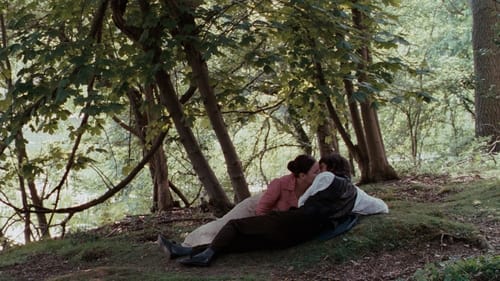




Bright Star manages to be an unusual biopic of an artist because it actually offers some understanding of its subject's creative process. Often, films focusing on writers—recent examples include To Olivia, concerning Roald Dahl, and The Laureate, about Robert Graves—present the act of writing as almost entirely inspired, with very little actual effort involved; sometimes not even that much. It’s taken for granted that writing happens effortlessly, poems appearing fully formed, like Athena springing from Zeus's head. Bright Star doesn't dismiss inspiration, but it doesn't accept it unquestioningly either; instead, it acknowledges and explains it (“If poetry does not come as naturally as leaves to a tree, then it had better not come at all”). Even while stating that “Poetic craft is a carcass, a sham,” this might be due to modesty (since a poet, according to the film, "is the most un-poetical thing in existence. He has no identity”), before delving into how poetry is actually made (“A poem needs understanding through the senses. The point of diving in a lake is not immediately to swim to the shore but to be in the lake, to luxuriate in the sensation of water. You do not work the lake out. It is an experience beyond thought. Poetry soothes and emboldens the soul to accept mystery”). This is all excellent, and writer/director Jane Campion clearly has a genuine appreciation for poetry, which she incorporates into her characters (who memorize their favorite poems and can even recite literary reviews word-for-word). The problem arises from the cast themselves, who seem lacking in personality and individuality; while this might be useful for portraying their poetic endeavors, as characters they come across as dull and uninteresting. Ben Wishaw is bland as John Keats, and although Campion should be commended for avoiding the cliché of depicting him as a rebellious figure (unlike Leonardo DiCaprio’s Rimbaud in Total Eclipse), she loses points for showing Keats's romantic interest, Fanny Brawne (Abbie Cornish), as a stereotypical groupie (early on, to make an impression, she recites some of Keats’s own poems back to him, as if he weren't familiar with his work). I realize that an artist's personal life—or lack thereof—often influences their creative output, but the romance between Wishaw and Cornish feels so saccharine and sentimental that it's hard to believe such sweetness could possibly lead to Keats’s beautiful poetry. Only Paul Schneider as Charles Armitage Brown, Keats’s fellow poet, seems like a reasonable person who can distinguish between poetry and reality; he initially appears rude simply for the sake of being rude, but we come to appreciate him more as we realize his disdain for Fanny is justified (I particularly enjoyed when he tricks her with a question about nonexistent rhymes in Paradise Lost).
On September 23, 2026
#8730▼ 366
8730th by Pulse movie online39.3PULSEPulse MeterOur daily Pulse Meter measures public activity and popularity signals across the web.How it works →