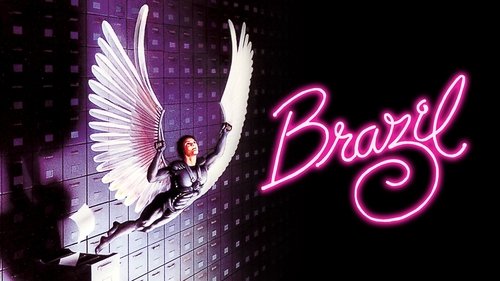




This movie sparked enough discussion to warrant multiple reviews: a blend of dreams, nightmares, a utopian vision, and stark reality. It was in 1939 that Ary Barroso introduced “Aquarela do Brasil,” an iconic samba that became central to Brazilian music. Celebrated voices like Francisco Alves, João Gilberto, Tom Jobim, Caetano Veloso, Tim Maia, Gal Costa, Erasmo Carlos, Elis Regina, and even Frank Sinatra and Carmem Miranda performed it. Ary Barroso couldn't have predicted that the image of an elderly man listening to his song on a rainy beach would inspire Terry Gilliam’s film. However, before anyone misinterprets this, particularly any Brazilian viewers, it's important to note that the movie has no connection to Brazil itself. The story unfolds in an unnamed country under dictatorial rule (though similarities to Brazil end when the film was released). The government, obsessed with controlling information, created a cumbersome and inefficient bureaucratic system prone to serious errors. One such error leads to the wrongful arrest and death of a citizen mistaken for a revolutionary. We are then introduced to Sam Lowry, a government employee living an ordinary life who is haunted by dreams of flying and rescuing someone. His existence changes when he encounters a woman resembling his dream figure, only to discover she’s also in danger due to another bureaucratic blunder. While I haven't seen both, I agree with critics who noted parallels between this film and "1984." I also recognized similarities to “Metropolis,” both in the narrative structure and its bizarre, exaggerated visuals. Like those films, it portrays a dystopian, totalitarian society where individuals lose their humanity and become mere cogs serving the State. The film offers pointed commentary on this system and the country's ineffective bureaucracy, as well as critiques of modern society’s superficiality and vanity. However, all of this feels somewhat disconnected. Sam, the protagonist, doesn’t appear to be a revolutionary or possess any clear political convictions; he seems driven by instinct, living almost like in a dream. The central plot is underdeveloped and clashes with the rest of the film, creating a discordance between the visuals and other elements of the script. Gilliam created an original work, but its various components don’t quite harmonize. He also faced pressure from studios who wanted to significantly shorten and reduce the cost of the film. I understand both sides: the studios needed to recoup their investment, while Gilliam was protective of his artistic vision. The money clearly went into the visuals—the dreamlike directorial style is striking. Jonathan Pryce delivers a strong performance as Sam, supported by Katherine Helmond’s cleverly sarcastic portrayal and Kim Greist in the romantic role. A cast including Bob Hoskins, Jim Broadbent, Barbara Hiks, Ian Holm, Michael Palin, and Robert De Niro also appears, demonstrating the respect Gilliam already commanded within the artistic community; actors seemed eager to work with him beyond just financial compensation. But why is it called *Brazil*, and what does that have to do with the song I mentioned? That’s a question I've pondered as well—it seems perplexing at first glance. Having seen the film, nothing immediately explains the title choice, aside from the song’s prominent role in the soundtrack. Perhaps Gilliam was attempting to contrast Sam’s dreamlike utopia with others’ fantasies and the harsh reality of his life through this musical motif.
On September 25, 2026
#927▼ 293
927th by Pulse movie online52.2PULSEPulse MeterOur daily Pulse Meter measures public activity and popularity signals across the web.How it works →














