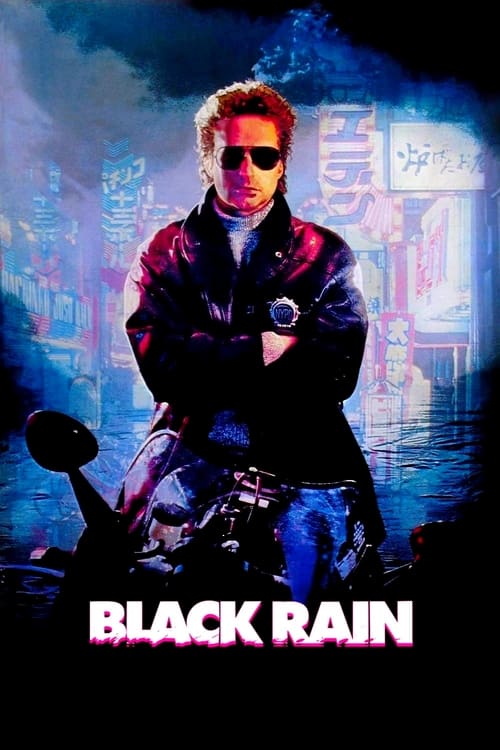





I think *Black Rain* is seriously underrated within the buddy cop and dramatic noir genre. It’s a shame that many of the people involved—including Sir Ridley Scott, Michael Douglas, and a then-relatively unknown Hans Zimmer (who composed the music score)—are now far better known for their later work. The film feels lost to time, with a current TMDB rating of just over 60%, overshadowed by all their other successes and awards. You don't have to take my word for it; Michael Douglas himself has mentioned in interviews that *Black Rain* remains one of his favorite films he’s ever been in, considering his extensive career. While fundamentally a classic 1980s cop movie—you can tell it's from another era by the casual smoking on airplanes—it felt very progressive for its time. The film was shot on location in Japan and features numerous Japanese actors who were major stars at the time, like Ken Takakura, Yusaku Matsuda, and Tomisaburo Wakayama, all speaking their native language, which is a refreshing change from typical Hollywood portrayals of Asia as a monolithic entity. It’s still striking how differently Asian cultures are often depicted in blockbusters even today. Interestingly, some Western critics at the time labeled *Black Rain* as "racist" or condescending toward Japan and its people. These critics seemed unable to distinguish between Michael Douglas' character—a flawed NYPD officer—and the film itself; a character’s biases don’t automatically make the entire work xenophobic. Douglas himself responded to these accusations by calling one of the critics, who admitted he had never even been to Japan. The movie was also nominated for best foreign film in Japan in 1990, receiving an award from the Japan Academy Film Prize. Michael Douglas' character, Nick Conklin, is a “flawed hero,” and an anti-hero as a lead was uncommon in mainstream Hollywood at the time—and still fairly rare today. The movie explores many morally gray areas, avoiding simplistic good versus evil narratives. While he acts like an aggressive outsider in Japan, you still find yourself rooting for him and his partner, Andy Garcia. Ken Takakura's character, Masahiro, is a significant addition to the film; even with fewer lines, he’s treated as an equal, not just a supporting local figure—another refreshing aspect given Hollywood standards. The geopolitical tensions between the U.S. and Japan in the 1980s and 1990s also play a role, particularly after the Plaza Accord of 1985 when both countries were major economic rivals. It’s hard to believe now, but at one point experts predicted that Japan would surpass the U.S. in GDP due to its smaller population. The film's title itself holds deep meaning and relates to these rivalries, which is revealed later on through a monologue by Tomisaburo Wakayama. The atmosphere of the movie—primarily set in Osaka with some scenes in New York City—is fantastic. It evokes the futuristic megalopolis of *Blade Runner* (another Ridley Scott film) with neon signs, reflections, smoke, and a vibrant nightlife. There's no unnecessary romantic subplot tacked on, which is common in many cop movies; it’s a straightforward story centered around male characters. Kate Capshaw has a small role as Joyce, providing translation for Nick. I don’t mind that the film focuses primarily on men—not every movie needs to be perfectly balanced. For example, both *Black Rain* and Ridley Scott's *Thelma & Louise*, made by the same director just a few years apart, are successful films with different character dynamics. It's also nice that the filmmakers avoided clichés like having Nick fall for a stereotypical “modern-day Geisha” or engaging in an affair. The movie avoids many of the usual blockbuster traps as well; the action is realistic, even if the finale is more dramatic. Nick isn’t simply mowing down enemies—a common trope in 1980s action films—and his character's limitations are cleverly built into the plot, restricting his access to weapons and ammunition. There’s a key scene involving motorcycles and roll shutters that deconstructs his macho image, leaving him trapped and helpless. The foreign setting serves as a mirror for Nick to confront his flaws and gain respect for his Japanese counterpart. This self-discovery reminded me of *Lost in Translation*, despite the films having little else in common. I would have loved to see Ridley Scott’
On September 27, 2026
#11286▼ 6033
11286th by Pulse movie online33.5PULSEPulse MeterOur daily Pulse Meter measures public activity and popularity signals across the web.How it works →