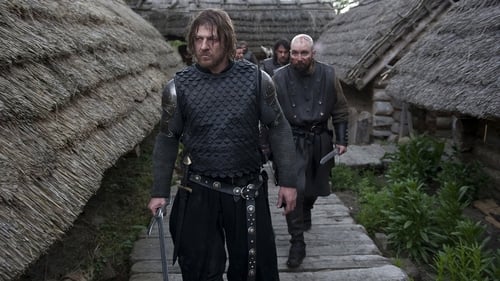





There’s been considerable discussion surrounding 2010’s “Black Death,” with Christians, pagans, religious individuals, agnostics, and atheists all offering their interpretations. It seems the film’s message is either profoundly deep or intentionally ambiguous. I think I've figured out what it’s really about, and I’ll share my reasoning later in this review. THE PLOT: Set in 1348 England, ravaged by the Black Death, the Roman Church suspects sorcery when they learn of a village untouched by the plague. They dispatch knight Ulrich (Sean Bean) and his soldiers to investigate. Along the way, they enlist a young monk, Osmund (Eddie Redmayne), as their guide; however, he has his own reasons for joining them: He hopes to reunite with Averill, a woman who sought refuge in a monastery but recently left due to the plague’s outbreak. The group claims to be devout believers, but will their faith hold up under extreme pressure? The film boasts impressive production values and was filmed in northeastern Germany. The story quickly draws you in, though it's the final act where the film truly shines, revealing that it isn't really about the Black Death itself—at least not literally. The bubonic plague serves as a backdrop for an intense examination of personal faith, whether genuine or false. Two significant characters are introduced later: Hob (Tim McInnerny) and Langiva (Carice van Houten), who hold authority in the village. Carice delivers an outstanding performance. Several scenes stand out as examples of strong filmmaking: a sequence where Langiva leads Osmund into the nighttime marsh for a striking revelation, and another when Osmund searches through misty reeds while Langiva reveals a disturbing truth. The extended water-pit scene is also memorable due to its sheer discomfort; it’s comparable to the Russian roulette sequence in "The Deer Hunter," but with added significance since the outcome in “Black Death” depends on the victims' faith or lack thereof and their ultimate fate. If Christianity is true, those who reject their faith face nothing but eternal damnation. “Black Death” runs for 1 hour and 42 minutes and shares similarities with films like "Witchfinder General," "The Wicker Man," "The Last Valley,” “Season of the Witch” and perhaps "Ravenous." I would say it’s just as good, if not better. GRADE: A (SPOILER ALERT – read no further unless you've seen the film) MY INTERPRETATION: Osmund wasn’t a true believer. He may have had positive qualities, but his lack of faith is evident from the beginning: he was having an affair with his girlfriend and seized any opportunity to leave the monastery so he could see her (using prayer and a supposed "sign from God" as a cover for his own deception). In fact, Averill told him that he’d “ALREADY betrayed God.” Dalywag, who tortures people for a living, points out that his purpose is to detect lies and directly tells Osmund that he's being dishonest. Despite his rough exterior and profession, Dalywag ultimately demonstrates his genuine faith by becoming the first person crucified for it. Langiva (the “red witch”) notes that she looked into each visitor’s eyes upon their arrival and saw that Osmund was the only one who wasn’t driven to harm them, indicating that she recognized the others as believers but not him—remembering that "the eyes are the windows of the soul." Although Osmund didn't explicitly deny God, he readily escaped the water pit to see his girlfriend in her cottage. He also openly disagreed with Ulrich and the soldiers’ views on Langiva and the villagers because he was one of them – an unbeliever, whether consciously or not. Finally, the ending clearly shows what happened to Osmund: he became a bitter, false accuser who cruelly tortured and killed people in the name of the church. As Jesus said, you can identify false prophets by their actions (Matthew 7:15-23). Some argue that Osmund being a fake believer is inconsistent because he was a monk living in a monastery and regularly prayed. But these things don't guarantee faith any more than having a garage makes you a car; true belief comes from the heart, not outward displays of religiousness, like those practiced by the Pharisees whom Jesus condemned as frauds. The first indication that Osmund wasn’t truly faithful was his attraction to Averill’s beauty and his subsequent lack of remorse. When Hob is captured and imprisoned, he's asked why he follows the red witch and replies, "Because she's beautiful." Thus, both Hob and Osmund were similar in that they abandoned their faith due to the allure of beauty. Although portrayed as brutal witch-hunters, Ulrich and his team were correct in suspecting the marsh village—the residents had indeed rejected God and witchcraft was being practiced, though in a somewhat deceptive form. Of course, it’s wrong to persecute people simply because they don't believe in God or follow pagan beliefs, but this was a different time and place, when the Roman Church held significant power. While Swire proved to be a false believer—a clear parallel to Judas—Ulrich, Wolfstan, Dalywag, and the other surviving soldiers demonstrated their genuine faith and escaped the "black death" of eternal suffering. The notion that Osmund is the protagonist is misleading. Ulrich and Wolfstan – gruff and flawed as they are – are the true protagonists of “Black Death.” Besides his bravery in the face of martyrdom, Ulrich strongly urges the villagers to "Repent before it's too late!"
On September 24, 2026
#7553▼ 1884
7553rd by Pulse movie online41.4PULSEPulse MeterOur daily Pulse Meter measures public activity and popularity signals across the web.How it works →