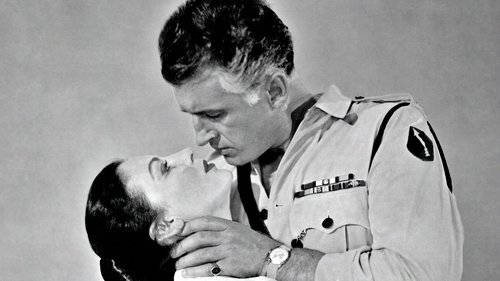




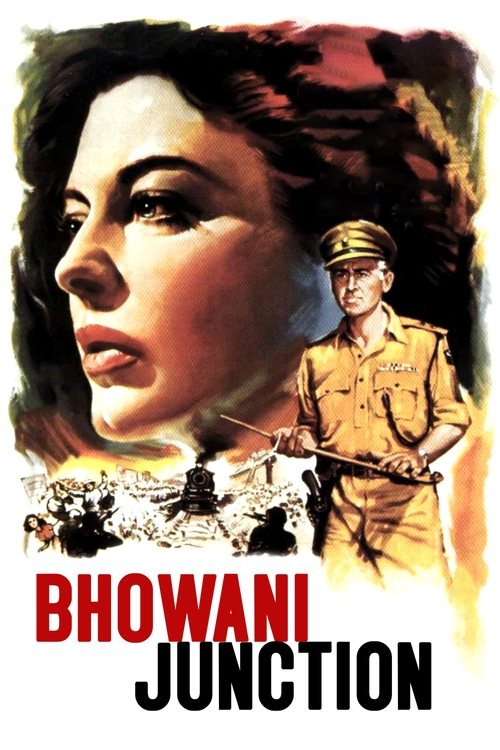
The story unfolds during the turbulent period leading up to the end of British rule in northwest India in 1947, centering on a woman of mixed heritage—the child of an English engineer and an Indian mother—played by Ava Gardner. She finds herself torn between two worlds while facing attention from three different men: a railway supervisor portrayed by Bill Travers, his Sikh assistant Francis Matthews, and British Colonel Stewart Granger. Simultaneously, advocates for Mahatma Gandhi are pushing for India’s freedom, while Communist activists, with a revolutionary named Davay (Peter Illing) at their head, contribute to the growing instability. "Bhowani Junction," released in 1956, is an adventure-filled drama reminiscent of "A Passage to India" from 1985, though it doesn't quite reach that film’s level of quality. It presents many of the images one might associate with India—large crowds often dressed in white clothing, trains, bustling streets, and so on. Gardner is visually striking, Granger embodies a dependable leading man, the filming locations feel genuine, and the historical backdrop provides intrigue. However, I found myself disbelieving a particular side story involving someone’s remorse over an incident; it didn't seem logical because their actions were taken in self-protection against someone deserving of condemnation. The film has a running time of 1 hour and 50 minutes. Filming took place in Lahore, Pakistan, which is near the border with northwest India. The train crash scene was filmed approximately 35 miles outside London, southwest of the city; another sequence occurred at Tram Tunnel on Kingsway in London; and studio work was completed at MGM British Studios just north of London. GRADE: B-/C+
On September 22, 2026
#26133▼ 5641
26133rd by Pulse movie online19.3PULSEPulse MeterOur daily Pulse Meter measures public activity and popularity signals across the web.How it works →