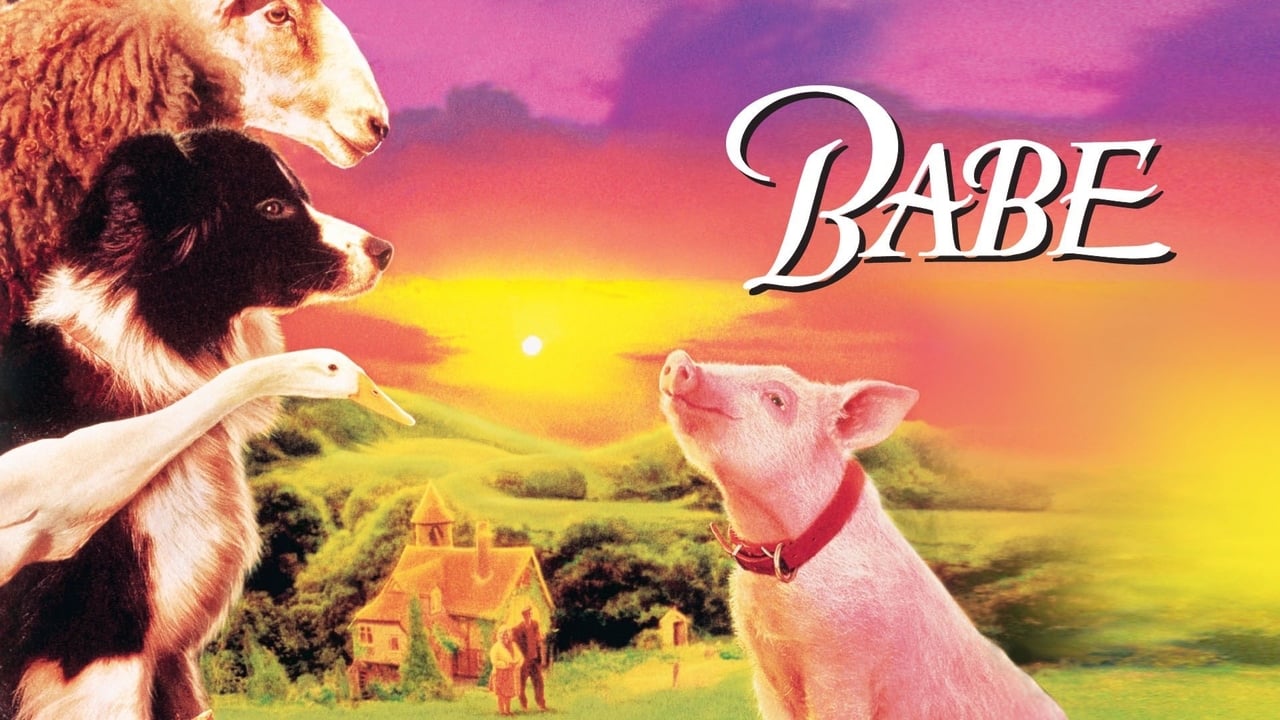




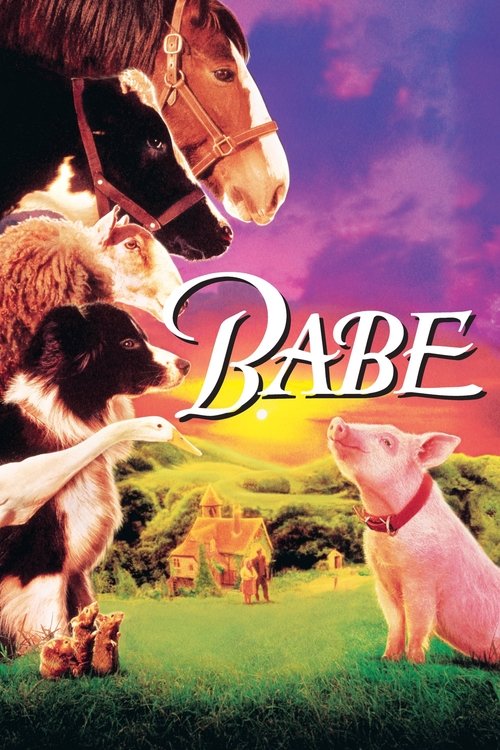
This film is truly wonderful and appropriate for all ages. It’s common to dismiss this movie as simply another children's film, but I disagree. While it does involve a fantasy world with talking animals exhibiting human behaviors and postures, its construction appeals strongly to adults as well. It’s an ideal choice for family viewing and appears frequently on television, particularly during the Christmas season. The script is exceptionally clever: Babe is a piglet who escapes what would have been certain death at the slaughterhouse—a fate shared by his parents and siblings. He ends up with the owner of a sheep farm, who intends to raise him for meat. However, through a series of humorous events, the pig demonstrates an unexpected talent for herding sheep, which challenges established animal hierarchies and the reputation of the sheepdogs. The film thoughtfully explores weighty themes like the meaning of existence, mortality, one’s place in the world, good versus evil, and reward and punishment, all while maintaining a lighthearted tone. Creating this movie as an animated production, either traditional or computer-generated, would have been straightforward. Instead, filmmakers used real animals and employed technology to refine the footage and smooth out any rough spots. At the time of its release, the film faced criticism for its implied commentary on meat consumption; reports even suggested some viewers stopped eating meat due to it. Although animals are central characters, what role do humans play? I don’t think their involvement significantly alters the story's impact. James Cromwell delivers a superb performance as the farm owner who recognizes Babe’s special qualities. Despite limited dialogue, his physical acting is outstanding. Magda Szubanski also does well; it’s interesting to note how her appearance has changed over time to suit the character of an older woman. Technically, the film is remarkable and achieves noteworthy feats. The sheer number of animals, trainers, and handlers involved is extraordinary, requiring immense logistical effort to ensure continuity and animal health and hygiene. The makeup department not only aged Szubanski but also subtly humanized some of the animals. The sets and props are excellent, effectively recreating a childhood vision of idyllic rural life, contrasting with the reality of hard farm work. Most impressive is the cinematography, which features vibrant colors, strong contrast, and striking beauty. Even I, who am not particularly fond of mice, appreciate their contribution to the film. The soundtrack draws heavily on classical pieces such as Johann Strauss II’s “The Blue Danube,” Gabriel Fauré's "Cantique de Jean Racine," and an adaptation of Camille Saint-Saenz’s Symphony No. 3’s final movement for pipe organ and orchestra. This selection may seem random, but it could be explained by the fact that Saint-Saenz also composed “Carnival of the Animals.”
On September 20, 2026
#1790▲ 68
1790th by attention movie online52.6Attention ScoreAttention ScoreOur daily Attention Score measures public activity and popularity signals across the web.How it works →