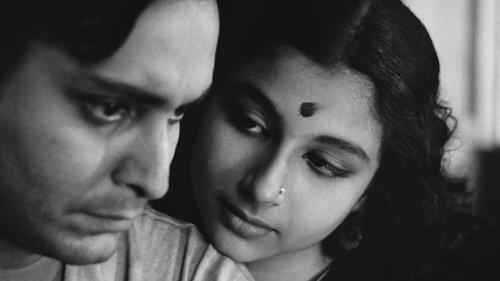





I already had a fondness for "Apu" by the time this third film in his story arrived, and Soumitra Chatterjee does a wonderful job portraying him. He's at a point where he needs to leave behind his student days and find work. Even with qualifications to teach, this aspiring writer discovers that’s not as simple as it seems, and he manages to get by, putting off paying his seven rupee rent for as long as possible and living frugally. Then his friend "Pulu" (Swapan Mukherjee) introduces him to his sister “Aparna” (Sharmila Tagore), which significantly alters the course of his life. Soon they’re married; she becomes pregnant and goes to stay with her more affluent parents for the later stages of her pregnancy. Before he can join them, a tragedy occurs that deeply affects the young man. Overcome by his grief, he sets off on a sort of pilgrimage, but it's aimless and without purpose. A chance meeting with "Pulu" several years later reminds him of his responsibilities to his young son “Kajal” (Alok Chakravarty), who has been raised by his grandfather. But can "Apu" handle seeing the child who represented the loss of his true love? And even if he does decide to reconnect, there’s no guarantee that the boy will want anything to do with a stranger. Whatever you do, avoid watching the colorized version. The film is beautifully crafted and full of character when viewed in black and white; it really emphasizes its humanity. Chatterjee portrays the lovestruck young man transforming into a grief-stricken wanderer exceptionally well, without resorting to melodrama or excessive emotion, and the scenes where he courts Tagore are truly lovely to watch, as is his reading of her letter—a mix of affection and warning. The location photography effectively captures both the poverty in which most people live and the beauty of their surroundings, and then the camera smoothly focuses on the characters as his travels reveal this vulnerable young man. Like many of Ray’s films, it keeps the narrative focused and also clearly promotes the value of education and self-respect—without "Apu" ever becoming overly preoccupied with himself. I felt genuinely sad when it ended, not because anything bad happened, but because I wanted to know what became of “Apu” afterward.
On September 24, 2026
#12642▲ 1626
12642nd by Pulse movie online33.0PULSEPulse MeterOur daily Pulse Meter measures public activity and popularity signals across the web.How it works →