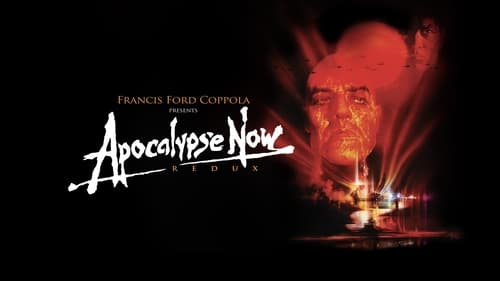





This is one of the greatest films ever made. The original "Apocalypse Now" remains an awe-inspiring masterpiece and my all-time favorite movie. There are so many memorable moments, beginning with the striking opening scene featuring Willard (Martin Sheen) experiencing a mental breakdown in his sweltering Saigon hotel room while The Doors’ “The End” plays. Speaking of Sheen, it's often overlooked how effectively he carries the film. His haunting narration is among the most powerful in cinematic history and immediately draws you into this nightmare adventure. I could easily go on about all the noteworthy scenes, but I’ll refrain, except to comment on Col. Kurtz: Was he truly insane or a brilliant thinker? General Corman tells Willard, "He's out there operating without any restraint, totally beyond the bounds of acceptable human conduct. And he is still in the field commanding troops." Yet, Kurtz was accomplishing what the U.S. military couldn’t or wouldn’t do due to political complications and formalities. I mention this because as I’ve gotten older, I've realized that I see myself as Kurtz in some ways—operating “out there” outside of the usual limitations associated with my work. The script was written by John Milius, with revisions by Coppola during filming; the narration was written by Michael Herr. The story’s meaning is clear: Capt. Willard’s journey upriver exposes him to opposing viewpoints on war, embodied by the two colonels he encounters along the way—both of whose names begin with ‘K,’ which isn't accidental. Lt. COL. KILGORE (Duvall) embraces war as a lifestyle and even thrives on it, essentially glorifying it. His romanticism is evident in the air raid on the village where he plays Wagner music as an introduction. He enjoys the war so much that he “loves the smell of napalm in the morning.” To him, war is just another day, so why not go surfing? Because he benefits from the conflict, it can’t harm him or even scratch him. Kilgore naturally has support from those in charge because he's part of the system and plays the game of war. COL. KURTZ (Brando), on the other hand, sees through this hypocrisy. He recognizes that being at war represents humanity gone mad—a state of living horror that must end by any means necessary. He refuses to participate in the charade of war, expertly eliminating double agents and others who oppose him. Of course, those in power can’t tolerate this, so they put out a hit on Kurtz through Willard. This increasingly disillusioned—and seemingly crazy—Kurtz finds himself without refuge after abandoning the system. Death is his only escape, and his consolation is that Willard will tell his son the truth. Coppola released the "Redux" version in 2001, adding 49 minutes of material he had previously cut, including relocating Clean’s surfing scene earlier in the story. I believe Coppola made the right choices with his original 1979 edit (2 hours, 33 minutes), because the extra footage in "Redux" tends to slow down the film; one or two scenes feel awkwardly written, like the theft of Kilgore's surfboard. Not every idea generated during the creative process deserves to be included in the final product, and “Redux” demonstrates this. The new material should have arguably been relegated to the “deleted scenes.” That said, I’ve grown to appreciate "Redux" and consider it a worthwhile version of the film—but only _if_ you've already seen the original theatrical release and **want more**. “Redux” successfully develops the characters and gives them greater depth, particularly Willard and Kurtz. Furthermore, the sequence where Kurtz reads articles from TIME magazine definitively shows that he wasn’t insane; rather, the military simply slandered him as crazy to justify assassinating a decorated officer. Coppola's preferred version is the "Final Cut," released in 2019, which runs a half hour longer than the theatrical release. It trims unnecessary elements from “Redux.” There’s also an unofficial “First Assembly” version that runs 4 hours and 49 minutes. The film was shot in the Philippines. GRADE: A+
On September 24, 2026
#422▲ 12
422nd by Pulse movie online55.5PULSEPulse MeterOur daily Pulse Meter measures public activity and popularity signals across the web.How it works →