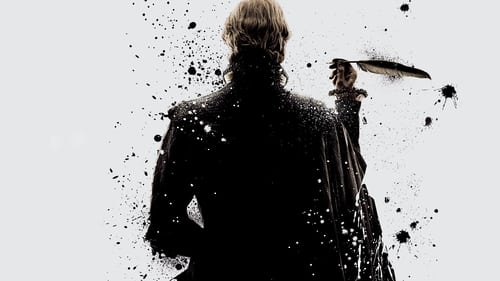




The movie would have been considerably stronger if it had fewer abrupt flashbacks, less reliance on anachronisms, and a clearer explanation of the theory it attempts to put forward. I’ve already written quite a bit here, repeating myself several times, but it's worth emphasizing that, despite being a historian with an appreciation for Shakespeare’s work, I am not a native English speaker—I'm Portuguese and speak my country’s language—nor am I a deeply knowledgeable expert on the playwright’s life or his writings. Therefore, I won’t cause offense by saying that, until seeing this film and researching it to write about it, I wasn’t aware of the controversies surrounding Shakespeare’s identity. It's perfectly reasonable for there to be uncertainties regarding the authorship of works by an older writer; many examples exist. What is less common is doubt concerning all of his work. The movie presents a theory that suggests the real Shakespeare didn’t write a single line and was illiterate. The individual who actually wrote the dramatic and poetic pieces attributed to him was someone unable to publicly claim authorship due to social and political constraints: the Earl of Oxford, a nobleman and courtier. I won't debate whether this is accurate or not—there are people more qualified to discuss it. What I can say is that I wasn’t persuaded. If Oxford couldn’t openly present his literary creations, how did he achieve recognition as a playwright and poet? It doesn’t seem logical. Furthermore, up until now, Shakespeare was an author who didn't warrant questioning. Attempting to portray him as someone else’s stand-in seems something that requires overwhelming proof, which we don’t have; the number of historical inaccuracies and anachronistic errors in the film also don’t inspire confidence in the theory it proposes. However, what I found most troublesome about this movie weren't the anachronisms or the far-fetched premise, but the flashbacks and flash forwards that happen almost without warning, making it very difficult to follow the narrative. I also disliked how the film assumes from the beginning that viewers are familiar with Shakespeare’s life and the Tudor period. I know something about it, but people shouldn't need to read an English history textbook before watching a movie. When I saw Roland Emmerich listed as director, I was worried too—I feared we were in for something badly mishandled or witnessing some kind of disaster. Fortunately, or perhaps not, we only have to mourn the loss of the Globe Theatre, completely destroyed by fire. Anyone who believed they could make a film without causing damage clearly didn’t know him. The film features excellent actors, and most deliver commendable performances. I especially enjoyed Rhys Ifans and Sebastian Armesto, but Rafe Spall, David Thewlis, and Joeli Richardson were also very good in their roles. Vanessa Redgrave did a fine job as well, although she's played a similar role before in another film, if my memory serves me correctly. Technically, the movie relies heavily on high-quality CGI and carefully selected filming locations. In every respect, it appears to be a substantial production with considerable effort and investment.
On September 23, 2026
#8382▼ 621
8382nd by Pulse movie online39.9PULSEPulse MeterOur daily Pulse Meter measures public activity and popularity signals across the web.How it works →














