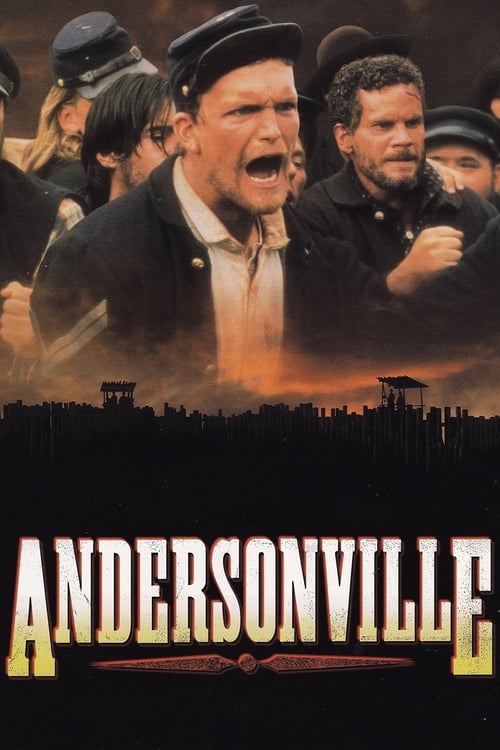




What exactly would one describe this depiction of suffering? The film focuses on the American Civil War, specifically Union soldiers held captive at Andersonville, a rudimentary prison compound overseen by Captain Henry Wirz, who is portrayed as both incompetent and unkind. It represents another grim and devastating period within that conflict. It’s important to acknowledge upfront that Andersonville wasn't the only brutal prison during the American Civil War; resources detailing experiences from various perspectives are accessible online for those interested in learning more. Nevertheless, this story demanded to be shared, and John Frankenheimer's two-part presentation powerfully places it before the audience. In terms of its cinematic elements, it employs familiar tropes common to POW movies. We’re introduced to a group of prisoners alongside a group of aggressive inmates, while those in positions of power watch on, seemingly indifferent to the harsh conditions and lacking in compassion. Despite adhering to this established framework, the filmmakers made an effort to create believable characters, which they largely succeed in doing. The film benefits from meticulous attention to historical accuracy; the costumes are exceptionally well done, and the prison’s design is intensely unsettling. Frankenheimer's camera movements emphasize the sheer scale of the misery, while Gary Chang's score avoids excessive melodrama. The cast members vary in quality—as one might anticipate with a large ensemble—and I wished William H. Macy had more screen time. Although roughly thirty minutes could have been trimmed from its length, Andersonville is a production that lingers in your thoughts. A final scene reinforces this impression. It earns a rating of 7/10.
On September 30, 2026
#16158▼ 2473
16158th by Pulse movie online3.0PULSEPulse MeterOur daily Pulse Meter measures public activity and popularity signals across the web.How it works →














