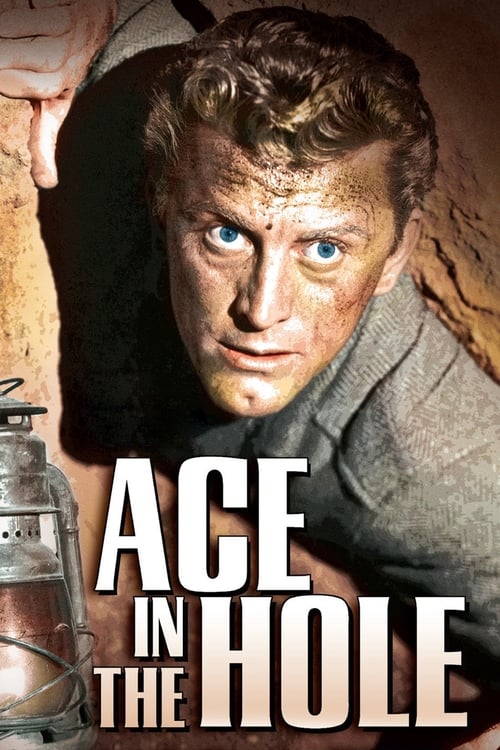





Billy Wilder’s Ace in the Hole stands as an exceptional example of cynicism, though the world it portrays feels quite different now. Kirk Douglas is superb as Chuck Tatum, a disgraced reporter who turns a man's predicament – being trapped in a collapsed cliff dwelling – into a calculated media event. Wilder’s direction is precise, controlled, and unrelenting; the film unfolds with the deliberate feeling of someone tightening a rope. What doesn't hold up quite so well is the story itself. In an age where artificial intelligence creates content and journalists often lack the time Tatum exploits so callously, his methods feel like they belong to a bygone industry. Tatum arrives in Albuquerque after being fired from eleven newspapers for dishonesty, drinking, and other offenses. He takes a job at a local paper while waiting for another chance to return to big-city reporting. When he discovers Leo Minosa trapped in a cave searching for Native American artifacts, Tatum sees his opportunity. He doesn't simply report on the story; he orchestrates it, working with a dishonest sheriff to delay the rescue and prolong the drama to attract national attention. A carnival sets up nearby, Leo’s wife benefits from the crowds, and thousands gather to watch. Tatum gets what he wants: headlines. Douglas makes Tatum captivating, a man whose charm and intelligence are intertwined with his cruelty. He doesn't portray Tatum as a monster; instead, he shows him as someone who believes the world owes him something and is willing to get it by any means necessary. It’s a powerful performance that carries the film even when the audience begins to question its believability. The idea that drilling from above wouldn’t cause another collapse, or that equipment in the 1950s could be so accurate, stretches credibility. However, these are minor issues in a movie more concerned with moral failure than technical details. What makes Ace in the Hole feel like an artifact rather than a cautionary tale is how much journalism has changed. Tatum’s deliberate manipulation—his ability to stay at the site and control the story for days—belongs to a media environment that no longer exists. Today's news cycle doesn’t allow for such patience; stories are generated by algorithms, attention spans last only hours, not weeks. Sensationalism continues, with outlets like Fox News prioritizing spectacle and distortion, while quality investigative reporting still occurs, but the average person scrolling through their social media feed can't tell the difference. Tatum’s style of hands-on villainy has been replaced by something more widespread, automated, and difficult to pinpoint. Despite this, the film remains a study in widespread dishonesty. Tatum is the driving force, but he isn't acting alone. The sheriff sees a chance for political gain. Leo’s wife sees an opportunity to make money. The public wants entertainment. Everyone participates, everyone profits, and the man trapped in the cave becomes insignificant in his own tragedy. Wilder understands that corruption isn't unusual; it’s a group effort. This realization remains strikingly relevant. Ace in the Hole is worth seeing for Douglas’s intense performance and Wilder’s skill as a filmmaker. Its specific warnings about journalism may feel like reports from another time, but its broader criticism of opportunism, shared responsibility, and humanity's desire for spectacle continues to be unsettlingly accurate.
On October 4, 2026
#8722
8722nd by Pulse movie online3.5PULSEPulse MeterOur daily Pulse Meter measures public activity and popularity signals across the web.How it works →