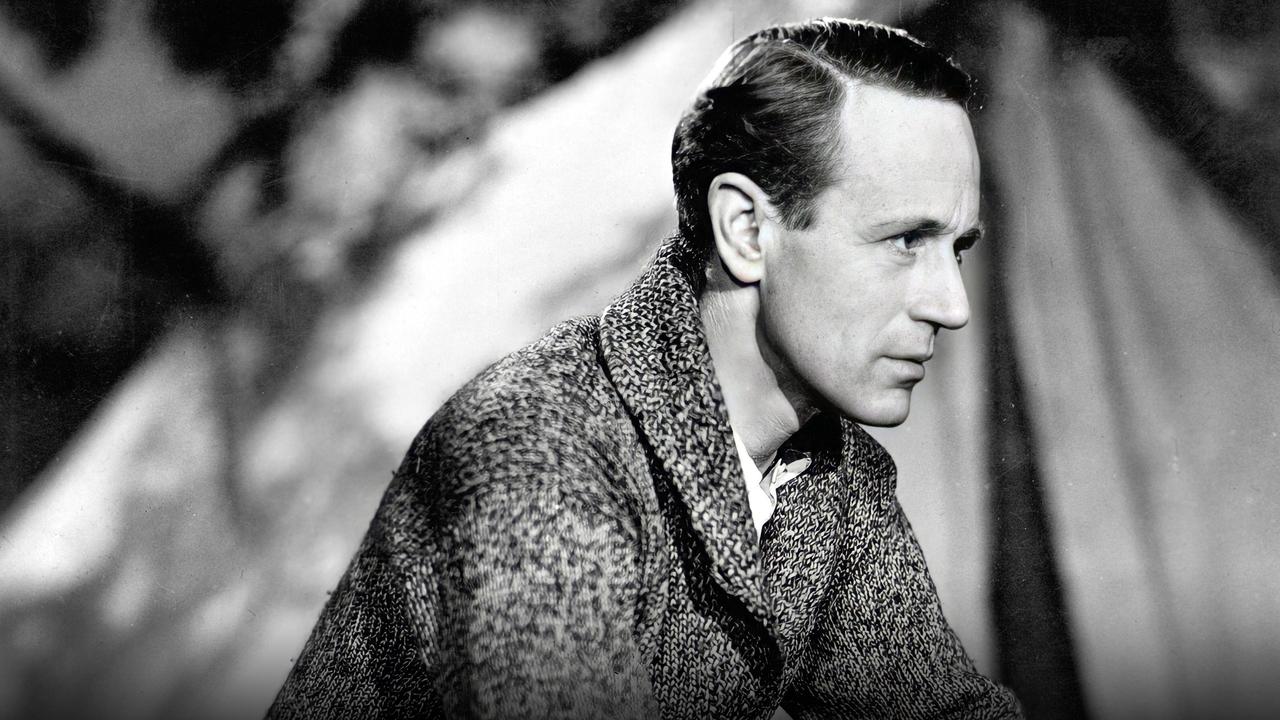





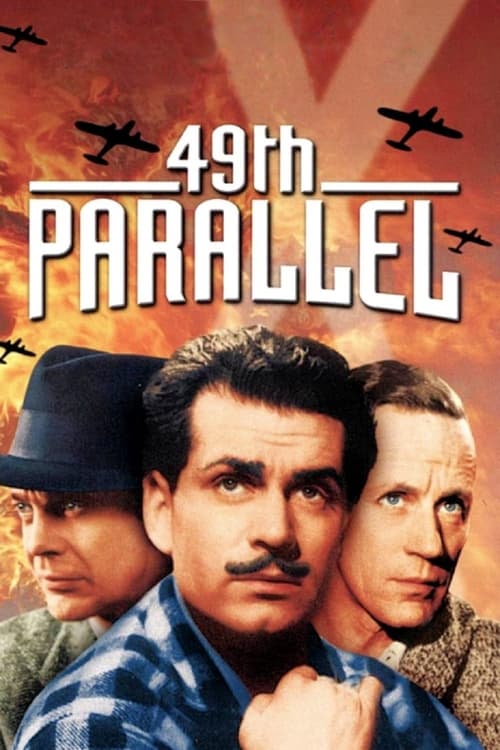
It’s an extraordinary story centering on characters typically portrayed as villains. Most films set during World War II focus on Allied soldiers operating behind enemy lines, but this one presents a striking contrast. Here, the narrative follows six German U-boat survivors stranded and pursued within enemy territory. There's so much to admire about this film that it would require extensive explanation. It’s even rumored to be the very reason Hitler placed a bounty on Leslie Howard, who satirized him with considerable flair—a bounty some believe contributed to Howard's actual death. Numerous intriguing details exist regarding the film’s production. Made in 1941, before December 7th, it depicts the U.S. as a neutral nation that the German survivors attempt to reach. A significant theme revolves around Canada's recent involvement in the war. The musical score is arguably among the greatest ever composed for film. The scenery is breathtaking, and the initial narration is exceptionally dramatic. While the story follows the German characters, they encounter various helpful individuals along their journey, each interaction revealing aspects of their personalities. What I find particularly insightful is how this film illuminates the inner workings of the German war machine. The six U-boat survivors are distinct individuals, each representing a different element within that system and driven by unique motivations. Eric Portman delivers an impressive performance as the group’s leader—a materialistic atheist who genuinely believes his actions constitute humanity. Second in command is a proud aristocrat boasting of being an early member of the Nazi party. A third character embodies morality, showcasing the best qualities of the Germans; he frequently rescues his companions and could easily be considered a hero on another side, yet his doubts about Nazi ideology lower him in the eyes of those whose lives he saves, people he is clearly superior to. Vogel, portrayed by Niall MacGinnis, becomes central to the story's most compelling segment, which unfolds within a religious commune in Canada—a development I won’t detail further. Another soldier is simply a brute, completely lacking compassion. A fourth serves as a willing instrument of Nazi cruelty. The fifth is an experienced soldier who displays bravery in uniform but crumbles when forced to navigate Canada in civilian clothes. Finally, the sixth soldier provides comic relief—a self-serving opportunist whose only concern is survival. A memorable scene contrasts his behavior with that of the leader during an outdoor shower, where the leader uses cold water to demonstrate toughness while the other man gives him a mocking look as he enjoys hot water. These six soldiers and their personalities offer profound insight into how the Nazi war machine was able to function for so long. The film also introduces a diverse cast of Canadian heroes: pilots who bomb the U-boat, a Scotsman running a trading post, a French trapper, an Eskimo assisting the trapper, two men arriving by plane to investigate issues at the post, another Eskimo who avenges civilian deaths by killing one of the Germans, a 15-year-old girl falling in love with Vogel, members of the Mounties pursuing the Germans, Native Americans helping to track them down, Leslie Howard as Philip Armstrong Scott, whose interactions with the group are noteworthy, a train deserter, and two freight inspectors. Essentially, it depicts an entire team of free people collaborating for the benefit of all humankind—a stark contrast to the Nazi ideology centered on materialism. This film deserves its place among the classics. It would be detrimental to the world if anyone were to dispute that status; the messages contained within are simply too important to disregard.
On September 20, 2026
#11568▲ 1076
11568th by attention movie online34.5Attention ScoreAttention ScoreOur daily Attention Score measures public activity and popularity signals across the web.How it works →