My Hand Outstretched to the Winged Distance and Sightless Measure
16 movies · 1967–2003
"My Hand Outstretched to the Winged Distance and Sightless Measure" is a film cycle created by Robert Beavers between 1968 and 2002. This collection is not a single, unified film, but rather a series of sixteen individual works that Beavers continually re-edited and re-contextualized over a period of 35 years. The title itself evokes a sense of layered meaning, which unfolds through the experience of viewing the films within the cycle. While sometimes presented as a cohesive whole in retrospective screenings, it is fundamentally understood as a collection of interconnected films. The cycle comprises 16 distinct films with a total runtime of 368 minutes. These individual works vary significantly in length, ranging from three minutes to a substantial 45 minutes. The films have been presented in various contexts, including retrospectives and museum programs, often treated as a single entity. Examples within the collection include "Winged Dialogue" (1967), a three-minute work, and "Ruskin" (1974), a 45-minute piece. Throughout its development from 1967 to 2003, the cycle has accumulated a total budget and revenue of zero. The films have been screened and presented in diverse settings, with varying levels of available information regarding their individual reception. The collection's runtime spans over three decades, reflecting Beavers’ ongoing process of shaping and reshaping these cinematic elements into a larger, evolving whole.
Franchise cast
All movies in chronological order
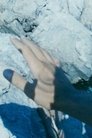 Winged DialogueThis film is an early look at how we experience closeness and see the world. It shows the body's beauty and sexuality as connected to inner feeling. Using images that fade and disappear, Beavers creates a rich mix of touch, memories, and lingering impressions that stay with you long after you've watched it.0.1
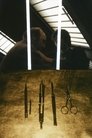 The Count of DaysThe film unfolds within a framework of distinct sections, presenting images on multiple levels: narrative, descriptive, and abstract. As Tom Chomont of Film Culture notes, "The Count of Days isn't so much a story as an exploration of the core of days shared by three people. It delves beneath appearances to expose the truth behind their interactions and the world they create."0.1
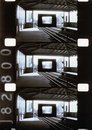 Diminished FrameRobert Beavers explores the interplay between historical memory and contemporary reality. The film contrasts black and white footage of West Berlin, evoking the past, with scenes of the filmmaker demonstrating how color is achieved through camera filters, grounding the present. Beavers seeks out remnants of war's impact alongside glimpses into everyday life.0.1
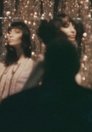 PalinodePalinode features a disk-shaped filter that constantly shifts, alternately obscuring or revealing portions of the image. This filter's movement is synchronized with operatic excerpts from Wladimir Vogel’s Wagadu, as the camera observes a middle-aged singer in Zurich. He is shown singing, eating, shopping, and interacting with a young girl. The filmmaker intentionally avoided defining the film's meaning during the production process.0.1
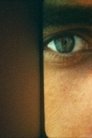 Still LightShot on the island of Hydra, the film examines a young man's face as it changes with different lighting and scenery, often seen through unique masks and filters. The unchanging face, set against famous locations, resembles a Renaissance portrait while exploring themes of youth and old age, making and breaking, images and words.0.1
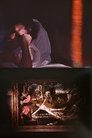 The PaintingBeavers blends footage of Bern traffic with images from the 15th-century altarpiece, *The Martyrdom of St. Hippolytus*. This revised version of the film intensifies its psychological impact by contrasting Markopoulos bathed in light with a fragmented self-portrait and repeated shots of a broken window.0.1
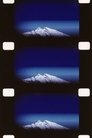 Work DoneFilmed in Florence and the Alps, the movie explores traditional European crafts like ice making, bookbinding, and cooking, with little focus on people. It uses visual connections between workshops and natural environments—like books and forests, or stone and mountains—to examine the relationship between craftsmanship and location.0.1
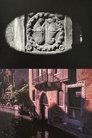 RuskinBeavers explores John Ruskin's lasting influence, traveling from London to the Alps and particularly Venice. The film focuses on the interplay between the city's architecture and waterways and Ruskin's writings, especially *Unto This Last*. Through images of the text and the landscape, the film reveals the critic's enduring ideas and his vision for society, all sustained by the act of reading.0.1
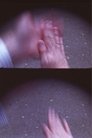 Amor"AMOR" is a visually poetic film exploring love and separation through the imagery of cutting and sewing. Shot in the landscapes of Rome and Salzburg, the film uses a combination of images and sounds to connect different themes.
Repetitive sounds of scissors, clapping hands, hammering, and tapping create a strong soundscape for its montage. By showing scenes of tailoring, restoring a building, and a figure – possibly the director – in a suit performing gestures at a natural theater, the film draws a parallel between editing and the work of cutting and shaping.
The film's carefully crafted sequences demonstrate a precise cinematic style; every frame is thoughtfully composed, each edit precisely timed, resulting in a captivating experience that connects with viewers emotionally. Ultimately, "AMOR" is an immersive exploration of the human experience through the relationship between art, work, and love.0.1
Amor"AMOR" is a visually poetic film exploring love and separation through the imagery of cutting and sewing. Shot in the landscapes of Rome and Salzburg, the film uses a combination of images and sounds to connect different themes.
Repetitive sounds of scissors, clapping hands, hammering, and tapping create a strong soundscape for its montage. By showing scenes of tailoring, restoring a building, and a figure – possibly the director – in a suit performing gestures at a natural theater, the film draws a parallel between editing and the work of cutting and shaping.
The film's carefully crafted sequences demonstrate a precise cinematic style; every frame is thoughtfully composed, each edit precisely timed, resulting in a captivating experience that connects with viewers emotionally. Ultimately, "AMOR" is an immersive exploration of the human experience through the relationship between art, work, and love.0.1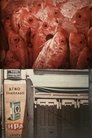 EfpsychiA young actor stands against the backdrop of ancient buildings in Athens' market district, where streets are named after Greek playwrights. In this quiet setting, punctuated by moments of activity, he utters the word "teleftea," meaning "the last." As he repeats it, the word transforms on his face, gaining new layers of meaning and suggesting a strange connection between desire, spirituality, and fate.0.1
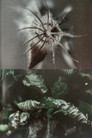 WingseedThe film explores themes of landscape and longing by contrasting dry land, wild grasses, and grazing goats with the exposed form of a torso bathed in changing light. The sounds of a shepherd, flute music, and bells synchronize with Beavers' rapid, side-to-side camera work, creating a dynamic visual and a compelling musical pattern.0.1
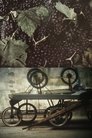 The StoasBeavers' film, named after the Lyceum's colonnades, contrasts brightly lit, empty arcades with serene scenes of streams and forests. The landscapes, devoid of people yet full of feeling, resemble both 19th-century paintings and a peaceful sense of spirituality.0.1
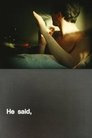 SotirosThis 26-minute film, adapted from a 50-minute trilogy made in 1996, was shot in Greece and Austria. It features two recurring intertitles, "He said" and "he said," which introduce subtle explorations of light and location – hotel rooms, cafes, hillsides, shops, and street scenes – presented with mirrored variations. The title refers to Apollo as a figure of rescue and healing.0.1
 The GroundCombining stonemasonry and filmmaking, Beavers uses the sounds of hammering and chiseling to explore memory, shaping both visuals and rhythm. The film creates a space where emptiness takes on a tangible form, enabling a deeper kind of seeing.0.1
 The Hedge TheaterShot in Rome during the 1980s, the film is inspired by Borromini's Baroque architecture and Il Sassetta's painting, *St. Martin and the Beggar*. Beavers uses the contrast between winter's muted light and spring's vibrant growth to create a carefully constructed montage where visuals and sound poetically interact.0.1
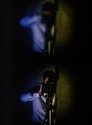 Early Monthly SegmentsShot when Beavers was 18 or 19, this film features him and Gregory J. Markopoulos in their Swiss apartment. It's a look at their daily lives, using ordinary things and personal moments to explore themes of love, memory, and longing.0.1